Happy News for the First Month of 2025!

Elephanatics is very pleased to share the most recent updates from the four recipients of the Fran Duthie Scholarship administered by our partner organization, Mara Elephant Project, in Kenya.

Learn about the exciting work these students are undertaking in conservation related fields. By securing an education for the next generation in wildlife conservation, we are helping to secure a healthy future for our planet as well. We wish them continued success with their programs!

If you’re interested in learning more about how you can support the scholarship fund in 2025, please email us or make a donation today. 

#maraelephantproject

An Update from the Four Recipients of the Fran Duthie Scholarship


#BlackFriday and #GivingTuesday

Greetings fellow elephant lovers!

We have some wonderful ideas on how to give back and support wildlife conservation too!

This #BlackFriday and #GivingTuesday Elephanatics is acknowledging the outstanding work efforts of the Mara Elephant Project in the Maasai Mara, Kenya. They have been a long-standing partner of Elephanatics and are top leaders in elephant conservation in Africa. We are grateful for their protection of wildlife through innovative techniques and technologies advancement to their dynamic co-existence strategies used to create economically resilient communities by cultivating and growing elephant friendly crops! We are proud to support and donate to their organization!

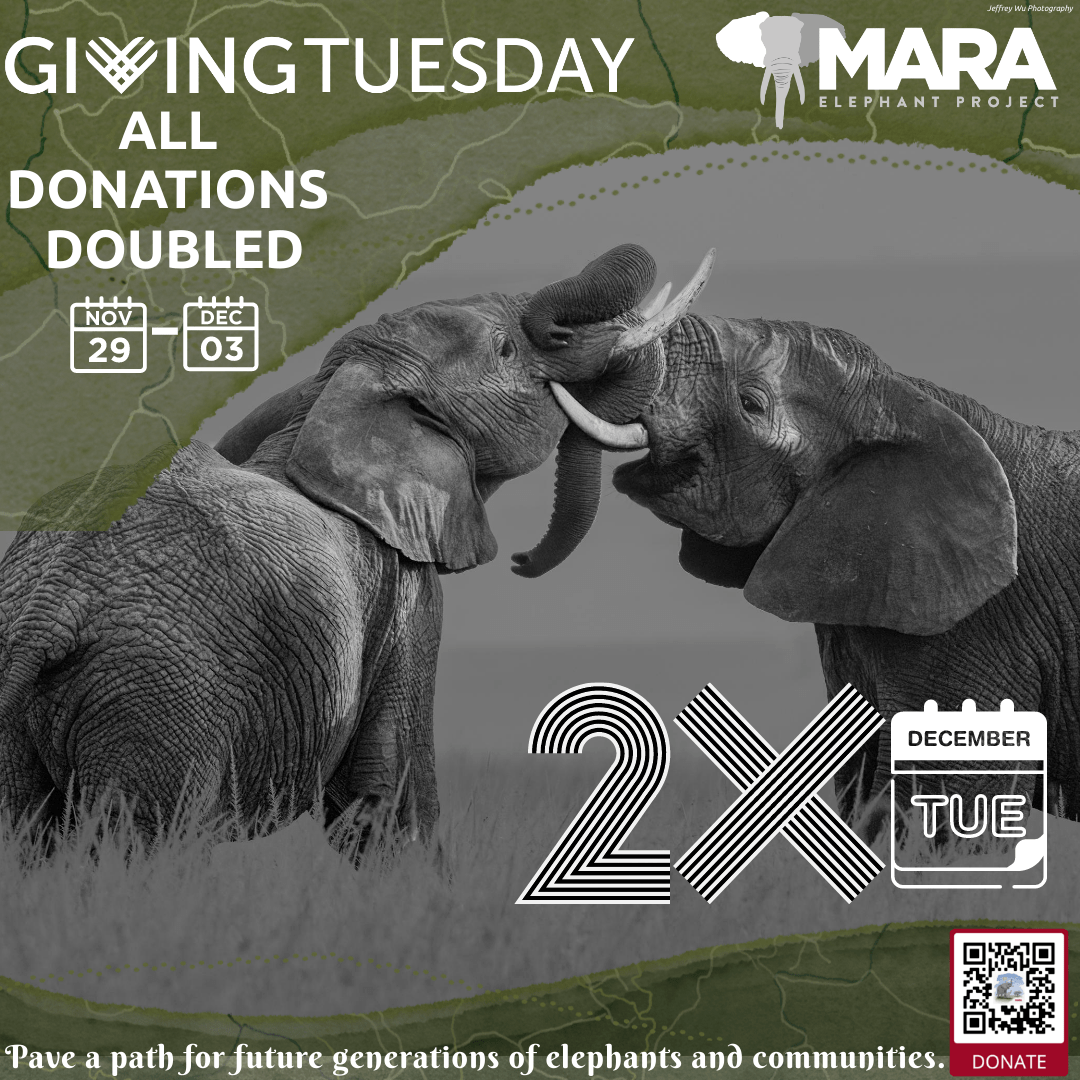
Starting November 29, Black Friday, thanks to the generosity of a donor, Mara Elephant Project is matching all donations up to $50,000 through to #GivingTuesday, December 3rd. The actions that MEP are taking now are paving pathways for future generations of elephants and communities that call the Mara home. Don’t miss the opportunity to help African communities retain their natural heritage by supporting their work. You can purchase their handmade items in link below:
https://linktr.ee/maraelephantproject?utm_source=linktree_admin_share

Double your impact by donating to Mara Elephant Project today to secure a future for elephants. You can also donate to Elephanatics as all our donations go directly to the Mara Elephant Project.

We thank you for your continued love of elephants and that you appreciate the amount of time, money, and effort it takes to protect these magnificent animals. We wish you a very happy, and healthy, holiday season ahead!

The Elephanatics Team!

COP16 CBD – Additional Protocol to UNTOC – Illegal Wildlife Trade – Canada

"Elephanatics Foundation - Free elephant conservation lesson plans, toolkits for teachers, and persuasive essay resources."
cr. Larry Laverty photos

Dear Subscriber,

The sixteenth meeting of the Conference of the Parties (COP16) to the Convention on Biological Diversity (CBD) is taking place in Cali in Columbia, from 21 October to 1 November 2024. Canada’s Kunming-Montreal  Declaration aims to set ambitious goals to halt the loss of biodiversity, promote sustainable development, and enhance global environment efforts by 2030. Elephanatics has written letters and sent emails to the Ministers of Environment and Climate Change and MP’s across Canada asking that they support the merits of a global agreement in the form of an additional protocol to the United Nations Convention against Transnational Crime (UNTOC) to strengthen the international legal framework to tackle illegal wildlife trade. Because the illegal wildlife trade is so interconnected with biodiversity loss, a global agreement is the next logical step to take.

We hope you consider writing your MP to support our ask. Find a pre-written letter here (featured Item)
Find your MP here 

See our communication below:

……………………..

The Honourable Steven Guilbeault, P.C., M.P.,
Minister of Environment and Climate Change,
House of Commons, Ottawa, ON
K1A 0A6
via email: Steven.Guilbeault@parl.gc.ca

cc:
Hon. Mélanie Joly, P.C., M.P., Minister of Foreign Affairs melanie.joly@parl.gc.ca
Hon. Arif Virani, P.C., M.P., Minister of Justice and Attorney General of Canada arif.virani@parl.gc.ca 

September 18, 2024 

Dear Minister Guilbeault,

Please see attached letter sent to you March 7, 2024, in reference  to strengthening the international legal framework to tackle the illegal wildlife trade by considering the merits of a global agreement in the form of an additional protocol to the United Nations Convention against Transnational Crime (UNTOC). Despite the scale and impact of IWT – one of the largest illegal markets in the world – a global agreement covering this topic still does not exist. 

The sixteenth meeting of the Conference of the Parties (COP16) to the Convention on Biological Diversity (CBD) is taking place in Cali in Columbia, from 21 October to 1 November 2024. Canada’s Kunming-Montreal  Declaration aims to set ambitious goals to halt the loss of biodiversity, promote sustainable development, and enhance global environment efforts by 2030. Because the illegal wildlife trade is a direct threat to biodiversity the inclusion of a new protocol under UNTOC in the form of a global agreement needs to be considered seriously as part of the Kunming-Montreal framework to curb biodiversity loss. A protocol under UNTOC would show a strong commitment in working  with partners to help curb the illegal wildlife trade and would also help bring other countries up to Canadian standards for wildlife trade. 

The Biodiversity Plan states – https://www.cbd.int/gbf/targets/4

TARGET 4: Halt Species Extinction, Protect Genetic Diversity, and Manage Human-Wildlife Conflicts

“Ensure urgent management actions to halt human induced extinction of known threatened species and for the recovery and conservation of species, in particular threatened species, to significantly reduce extinction risk, as well as to maintain and restore the genetic diversity within and between populations of native, wild and domesticated species to maintain their adaptive potential, including through in situ and ex situ conservation and sustainable management practices, and effectively manage human-wildlife interactions to minimize human-wildlife conflict for coexistence.”

Actions to reach Target 4 should take into account all of the considerations for implementation identified in section C of the Kunming-Montreal Global Biodiversity Framework.

https://www.cbd.int/gbf/introduction

Cooperation and synergies

(q)  “Enhanced collaboration, cooperation and synergies between the Convention on Biological Diversity and its Protocols, other biodiversity-related conventions, other relevant multilateral agreements and international organizations and processes, in line with their respective mandates, including at the global, regional, subregional and national levels, would contribute to and promote the implementation of the Framework in a more efficient and effective manner;”

The illegal wildlife trade imperils biodiversity, contributes to climate change, creates economic instability in communities and is responsible for global pandemics. The way forward is to unify and collaborate with similar organizations and partners to  thwart biodiversity loss.

Once again, we ask that you consider a new protocol under the UNTOC in the form of a global agreement to strengthen the international legal framework to tackle the illegal wildlife trade.

Thank you.

Sincerely,

Fran Duthie
Fellow in The Royal Canadian Geographic Society

President / Co-Founder Elephanatics
………………………………………
Letter to Minister Guilbeault – March 7, 2024

The Honourable Steven Guilbeault, P.C., M.P.,
Minister of Environment and Climate Change,
House of Commons, Ottawa, ON
K1A 0A6
via email: Steven.Guilbeault@parl.gc.ca

cc:
Hon. Mélanie Joly, P.C., M.P., Minister of Foreign Affairs melanie.joly@parl.gc.ca
Hon. Arif Virani, P.C., M.P., Minister of Justice and Attorney General of Canada arif.virani@parl.gc.ca 

March 7, 2024

Dear Minister Guibeault,   

A coalition of organizations co-signed a letter written by the Global Initiative to End Wildlife Crime, addressing the need to strengthen the international legal framework to tackle the illegal wildlife trade (IWT), and was sent to you on 7 September 2023, asking for ways to better understand Canada’s views on how best to tackle wildlife trafficking at the international level. I am following up and have added more points to the initial letter sent by Global Initiative to End Wildlife Crime and coalition to further support our request.

Despite the scale and impact of IWT – one of the largest illegal markets in the world – a global agreement covering this topic still does not exist. We are writing to ask you to support this initiative by considering the merits of a global agreement, taking the form of an additional Protocol to the United Nations Convention against Transnational Organized Crime (UNTOC).  As stated in the letter:

“The size and scale of wildlife trafficking is truly a global challenge and one that demands urgent action. The value of illegal trade has been estimated at between $7 and $23 billion per year.” A report by FINTRAC acknowledges, “illegal wildlife trade not only affects Canada, but poses a serious threat internationally”. Canada has signaled that this is a priority issue to address, both at home and abroad, and we were pleased to see that the mandate letter released by the Prime Minister on 16 December 2021, included a commitment for Canada to “work with partners to curb illegal wildlife trade”.

 In the same mandate letter,  the Canadian Government mandated an end to the elephant ivory and rhinoceros horn trade in Canada. We were very pleased to see these regulations enacted 20 November 2023. It is now time to deliver on the third item in this part of the mandate letter : new actions to combat the illegal wildlife trade.

Additionally, in December 2023, the United Nations Office on Drugs and Crime (UNODC) released an updated report containing the views of 73 States and the European Union on the potential of an additional Protocol to the UNTOC covering wildlife trafficking. UNODC did not produce an analysis of the report, but the Global Initiative to End Wildlife Crime – at the request of Angola – did and concluded that around 78% of the responding States are either in favour of a Protocol or open to discussing it: PRESS-RELEASE-07-DEC-UN-report-shows-clear-majority-of-States-now-favour-a-new-global-agreement-against-wildlife-trafficking-.pdf (endwildlifecrime.org)

February marked the 10th anniversary of a declaration signed by Canada and 41 other countries at the first London conference on Illegal Wildlife Trade, 2014, to implement actions to:

(1) improve law enforcement,
(2) improve legal frameworks against IWT
(3) reduce demand for illegal wildlife and
(4) support alternative livelihoods. 

https://cites.org/sites/default/files/eng/news/sundry/2014/london-wildlife-conference-declaration-140213.pdf

Beyond Canada’s commitment of a $2 million donation in emergency funding to combat illegal wildlife trade activities in East and Central Africa, and the recent ban of elephant ivory and rhino horn along with the import of hunting trophies containing these parts, have there been further measures Canada has put into place to support the declaration signed at the London Conference? 

https://www.un.org/en/chronicle/article/london-declarations-role-fight-against-wildlife-trade

Canada is putting together its action plan for the Global Biodiversity Framework to show action on Kunming-Montréal convention prior to CoP 16 in the fall. Because the illegal wildlife trade is a direct threat to biodiversity the inclusion of a new protocol under UNTOC would be proactive to add to its strategy on how best to curb biodiversity loss.

A protocol under UNTOC would also help bring other countries up to Canadian standards for wildlife trade. 

As Minister of Environment and Climate Change, you have an important role to play in the future of our planet and the wildlife that we are intrinsically tied to for our own survival. The illegal wildlife trade undermines governance, corrupts and weakens security within a country as well as threatens its economies and biodiversity. It is imperative we end wildlife trafficking to cease the destruction of global biodiversity, help mitigate climate change, avoid future pandemics, and protect communities and economies that are reliant on the use of sustainable natural resources. 

Supporting a  global agreement in the form of an additional Protocol to the United Nations Convention against Transnational Organized Crime (UNTOC) would show a strong commitment in working  with partners to help curb the illegal wildlife trade.Thank you for your attention to this request. 

Yours sincerely,

Fran Duthie
President,  Elephanatics


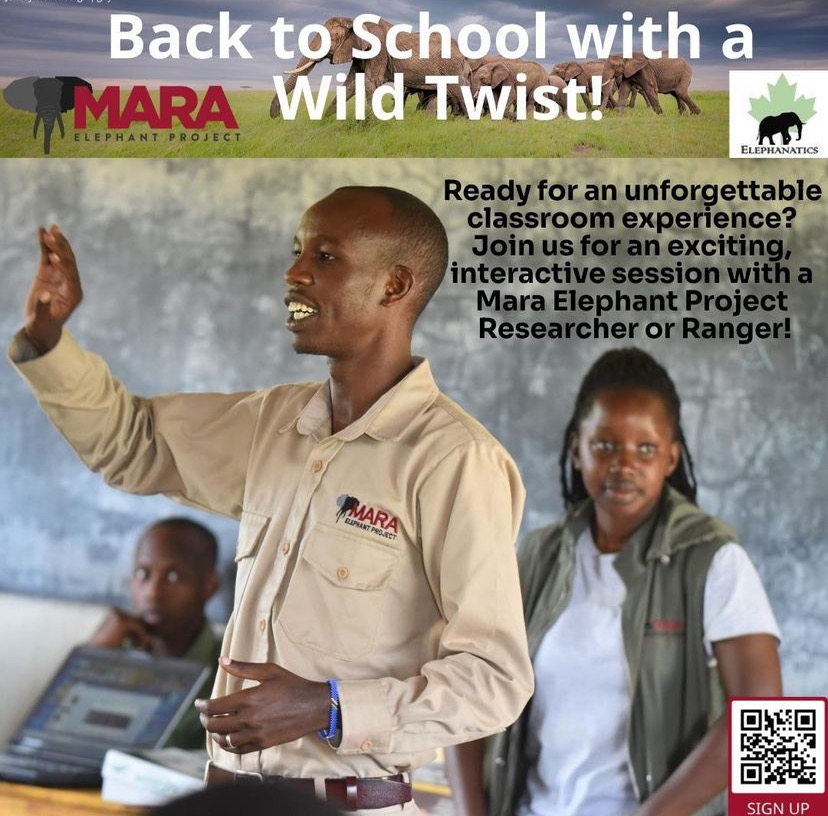
BRING A WILDLIFE RANGER OR RESEARCHER INTO YOUR CLASSROOM!

It’s Back To School and we have some great news for all educators!

Elephanatics and Mara Elephant Project are offering educators a unique opportunity to invite via Zoom a Mara Elephant Project ranger or researcher into your classroom. Students will have the chance to interact with a Kenyan conservationist and learn more about the work they are doing to protect elephants and their habitats in the Greater Mara Ecosystem.

Go to link below to book your spot today and share with fellow friends, teachers and educators!

"Elephanatics Foundation - Free elephant conservation lesson plans, toolkits for teachers, and persuasive essay resources."

Educational Resources

Elephanatics Newsletter – August

Greetings fellow elephant lovers! We hope you are enjoying summer and finding time to get outside and explore the many wonders of nature. We have some good news for elephants this report and many ways you can participate to join us in helping them. Thank you for continuing to support elephants!

Celebrating the 13th Annual World Elephant Day |August 12th, 2024 


Photo cr. Patricia Sims

Join us in celebrating the 13th annual World Elephant Day (WED), founded by Canadian conservationist and filmmaker, Patricia Sims. WED is globally recognized for elephant conservation organizations to bring awareness to their conservation programs that protect elephants and their habitats – a very important day to fundraise to support respective elephant conservation initiatives.

This year Elephanatics and long-term partners, Mara Elephant Project and World Elephant Day, are joining forces to make WED a mutually beneficial and positive collaboration for elephants. Patricia Sims will be visiting MEP, David Sheldrick Wildlife TrustReteti Elephant Sanctuary and Save the Elephants to learn first-hand issues facing elephants and how to collaborate to ensure their long-term survival.

Patricia’s trip will help to further develop the relationships WED has with these organizations  and continue to build upon the growing importance of the annual World Elephant Day campaign to bring global attention to the critical issues that threaten the future survival of elephants by educating the public about the solutions that these organizations are undertaking  to help mitigate these threats – and how people can help.

Stay tuned for more information on Patricia’s planned activities in Kenya by following World Elephant Day  here.

Meet the New Class of Fran Duthie Scholarship Participants 2024


Inaugurated in 2022, the Fran Duthie African Elephant Conservation Scholarship has supported Janeth Jepkemboi, the inaugural recipient, who is now completing her MSC in Environmental Studies. This year four more eager students are recipients of the award helping to ensure that Kenyan youth are leading conservation efforts in their country. Read more about the recipients and join us in celebrating World Elephant Day by donating to the Fran Duthie Scholarship here.

Elephanatics Continues Its Advocacy Efforts

  • The recent killing of five big tuskers along the Kenyan Tanzanian border, breaking a 30-year moratorium, has roused global concern. With as few as 50 big tuskers alive in Africa these elephants are critically important for stability in elephant societies, their habitats, and ecosystems. Elephanatics has sent a letter to Minister Stephen Guilbeault asking to use Canada’s international influence, and powers of collaboration to protect these few remaining tuskers. Read letter here.


  • A coalition of organizations co-signed a letter written by the Global Initiative to End Wildlife Crime, September 2023, addressing the need to strengthen the international legal framework to tackle the illegal wildlife trade (IWT). Elephanatics has since written letters to Members of Parliament across Canada and to the Minister of Environment and Climate Change, Stephen Guilbeault, to follow up on our ask and to encourage MPs to speak with Minister Guilbeault and other members of Parliament to address this issue as a matter of urgency. A global agreement taking the form of an additional Protocol to the United Nations Convention against Transnational Organized Crime (UNTOC) is urgently required to provide an international legal framework that will address the multi-billion-dollar illegal wildlife trade. Read letter  here.

NEW EDUCATION RESOURCE!
Bring a Wildlife Ranger or Researcher into Your Classroom

Elephanatics and Mara Elephant Project are offering educators a unique opportunity to invite via Zoom a Mara Elephant Project ranger or researcher into your classroom. Students will have the chance to interact with a Kenyan conservationist and learn more about the work they are doing to protect elephants and their habitats in the Greater Mara Ecosystem. This is a completely free opportunity to global educators – Book your session here.

Elephanatics November 2023 Newsletter

Greetings Elephant Friends!

Please read the latest news in what we have been up to over the past few months.


Giving Tuesday is November 28th – Give to Help Protect Elephants

Read more about Janeth Jepkemboi, the first scholarship recipient here.

The Fran Duthie African Elephant Conservation Scholarship in Partnership with the Mara Elephant Project is a scholarship that provides financial support to Kenyan nationals in studies related to conservation. In its second year this scholarship provides financial support to youth working to protect and safeguard Africa’s wildlife now and into the future. Your support will help grow the fund to create more opportunities for students, like Janeth, to pursue a degree in a conservation related field and gain the experience they need to find solutions that benefit both people and wildlife.

Donate this GIVING TUESDAY here *Please state in the comments section under ‘Donate Now’ that you would like your money deposited to the Fran Duthie African Elephant Project Scholarship.


Ivory-Free-Canada Campaign to End the Legal Trade of Ivory in Canada – UPDATE


Thanks to all of you for your continued support to end the legal trade of elephant ivory and rhino horn in Canada. In our last update to you, the Prime Minister’s office had mandated Steven Gilbeault, Minister of Environment and Climate Change Strategy, to implement regulations that would end the trade. We have assurances this is slowly making its way through the Minister’s office but has not been implemented yet. Please standby for further updates. Meanwhile, let’s keep up the pressure and continue to sign and share the #IvoryFreeCanada petition here.

We are hopeful!


Strengthening the International Legal Framework to Tackle the International Wildlife Trade

Elephanatics co-signed and supports a letter written by John Scanlon, Chair, Global Initiative to End Wildlife Crime, which addresses the need to strengthen the international legal framework against wildlife trafficking. The letter was sent to Canada’s Environment Minister, Steven Guilbeault, requesting the Government of Canada support an additional Protocol to the United Nations Convention against Transnational Organized Crime (UNTOC) underscoring the urgent need to take action against the estimated $7 – $23 billion trade in illegal wildlife per year. Read more here.


Education Education Education!


At Elephanatics we believe that education is the leading factor in spreading awareness about the wonders and importance of the elephant and why they need protecting!

By learning about elephants and sharing with friends, peers, family members, classmates, and educators, we can create a culture of conservation and caring for our planet’s most incredible and unique wildlife. Download this brochure for quick facts, or to book a classroom presentation. Click here to access our free online educational resources for teachers “Elephants: The Need For their Survival”.


Thank you for your continued support and stay tuned for #GivingTuesday!

The Elephanatics Team


FREE and FUN – Elephant Lesson Plans for Teachers and Educators

Download –  Elephanatics Education Brochure"Elephanatics Foundation - Free elephant conservation lesson plans, toolkits for teachers, and persuasive essay resources."


Happy World Elephant Day 2023!

Celebrate #WorldElephantDay today by donating to your favourite elephant conservation organization!

#IvoryFreeCanada

https://worldelephantday.org/news/2023/08/an-ivory-free-canada-is-almost-here?fbclid=IwAR3C1NkJYmbs8UaZEThTsfDDR81gd38sJtQerwN9kkLGvTRtm5oXtH1x4h4

What Happened to Protecting Elephants and Rhinos?


“Elephants are not human, of course. They are something much more ancient and primordial, living on a different plane of existence. Long before we arrived on the scene, they worked out a way of being in the world that has not fundamentally changed and is sustainable, and not predatory or destructive.” 
 
Alex Shoumatoff


One might question why humanity continues to be a formidable and increasingly detrimental threat to nature, while nature continues to be the only hope left for our survival. The phrase, ‘cut off your nose to spite your face,’ comes to mind. 

Undeniably, humankind has never fathomed the nuances required to sustain a viable and healthy world, but rather has created an ecological and environmental conundrum that will be the demise of our species and many other species, unless immediate action is taken to reverse this deleterious trend. Elephants and many other wildlife species are becoming extinct from the increased threat of habitat loss and the illegal wildlife trade mainly due to humanity’s ignorance.  

In March 2022, the Canadian government mandated to end the elephant ivory and rhinoceros horn trade and work with partners to curb the illegal wildlife trade in Canada. We are still waiting for action to be taken on this initiative. The following information reaffirms the necessity to get this mandate done as soon as possible:

In a report by the International Monetary Fund (IMF) Finance and Development department, the carbon value of a single forest elephant is worth $1.75 million dollars. Elephants help mitigate climate change by maintaining forest and savannah ecosystems for other species and are integrally tied to rich biodiversity.

In a study done by Yale school of the Environment on climate change, Professor Oswald J. Schmitz states, “Wildlife species, throughout their interaction with the environment, are the missing link between biodiversity and climate. This interaction means rewilding can be among the best nature-based climate solutions available to humankind.” 

The data in this study showed that protecting or restoring wildlife populations could collectively facilitate the additional capture of 6.41 billion tons of carbon dioxide annually. This is 95% of the amount needed every year to meet the Paris Agreement target of removing enough carbon from the atmosphere to keep global warming below the 1.5-degree Celsius threshold. The health of our planet is ultimately dependent on healthy biodiversity and ecosystems globally.

To be certain, the elephant ivory trade dates back to the 14th century. During the colonization of Africa, approximately 800 to 1,000 tonnes of ivory was sent to Europe every year to be used for making piano keys, billiard balls, and other usages. By the 1970’s Japan consumed approximately 40% of the global trade and another 40% was consumed by Europe and North America. 

Fast forward to today and China has become the largest consumer of ivory products in the world where the vast majority of smuggled ivory—experts say as much as 70 percent—ends up. With increased economic growth, a wealthy Chinese middle class has fuelled the demand for luxury ivory products and although seizures of illegally obtained ivory take place, much of the smuggled ivory still gets through. The Convention on International Trade of Endangered Species (CITES) reports that nearly all the current demand for elephant ivory comes from the Chinese market.

In March of 2021, the African forest elephant, Loxodonta cyclotis, was listed as critically endangered and the African savanna elephant, Loxodonta africana, as endangered on the International Union for Conservation of Nature (IUCN) Red List of Threatened Species. The causes are identified as poaching for ivory in the short term and habitat loss in the longer term. The number of African forest elephants fell by more than 86% over a period of 31 years, while the population of African savanna elephants decreased by at least 60% over the last 50 years. The Red List continues to classify the Asian elephant as endangered with as little as 52,000 left in the wild.  

According to an IUCN Report, approximately 111,000 elephants were lost between 2006-2015 leaving an estimated 415,500. In the last forty years, elephant habitat has decreased by nearly two thirds largely due to human activities.

A paper led by the Mara Elephant Project’s Director of Research and Conservation Dr Jake Wall, discovered that human activity largely shapes the behaviour and distribution of modern elephants. 62% of Africa has suitable habitat for elephants, but the animals use just 17% of that habitat and are absent – for now – in the remaining 83%.

Along with poaching, the demand for rhino horn is highly sought after for Traditional Chinese Medicine use. The trade of TCM using body parts of IUCN red-listed animals must be regulated. Additionally, new research by Vincent Nijman, Professor in Anthropology at Oxford Brookes University states, “With three out of four newly emerging infectious human diseases originating in animals, there is an urgent need to monitor the legal trade in wildlife… given that in many instances the legal wildlife trade is several orders of magnitude larger than the illegal trade, it is ineffective and possibly dangerous to focus on the illegal wildlife trade only.” Pandemics will continue as long as the legal trade in wildlife goes unabated.

Consequently, wildlife trafficking has quickly become a multi-billion-dollar transnational criminal activity that is not only a conservation issue but also a security threat. It is ranked as the fourth most profitable transnational crime, only behind the drug trade, arms trade and human trafficking. During the pandemic, there was a significant shift toward online sales of ivory, particularly on eBay and social media.

In May of 2022 the UN moved closer towards tackling the illegal wildlife trade. The UN Commission on Crime Prevention and Criminal Justice (CCPCJ) adopted an historic resolution. Angola, Kenya, and Peru submitted the draft resolution in April. It was titled ‘Strengthening the international legal framework for international cooperation to prevent and combat illicit trafficking in wildlife.’ It called on the UN Office on Drugs and Crime (UNODC) to consider the benefits of adopting an additional protocol in the UN Convention against Transnational Organized Crime (UNTOC). 

This additional protocol would be specifically about preventing and combating the illegal wildlife trade. Current protocols in UNTOC cover the trafficking and smuggling of people, and the manufacturing and trafficking of arms. This is a step in the right direction!

Furthermore, in February of 2023, a new public-private partnership, targeting the global black market in wild animals and their body parts, was initiated by Scotiabank and FINTRAC, which encourages  information sharing between financial institutions, conservation groups, and financial intelligence units in Canada, South Africa, Australia, the U.K and elsewhere. This is a huge initiative and targets the middlemen responsible for illicit wildlife trafficking. 

Money laundering plays a significant role in the illegal wildlife trade with criminals looking for an easy way to move whatever commodity they can to make a profit. Sam Cooper, Canadian investigative journalist and founder of The Bureau says that international law enforcement have identified networks of hunting junket operators in Canada, Latin America, Africa and Australia, intertwined with fentanyl traffickers and Chinese state actors. Cooper said illegal wildlife hunting and trafficking facilitate laundering of drug cash and movement of narcotics for gang bosses, but junket operators also use illegal big game hunting as a social networking tool, gathering gangsters, corrupt officials, and state actors. “Vice and profit go hand-in-hand in these international crime and corruption networks,” Cooper said. 

While strong law enforcement initiatives are imperative to curb the illegal wildlife trade, the fact remains that habitat loss, poaching, human-elephant conflict, trophy hunting, and the legal ivory trade are still enormous threats contributing to elephant population declines and their survival.

We continue to encourage the Canadian government to follow through with its mandate as a matter of urgency and we ask that you do the same.

Please Take Action to make sure the government fulfills its obligation and stops stalling on its commitments. 

 “In the end … success or failure will come down to an ethical decision, one on which those now living will be judged for generations to come.”   Edward O. Wilson

Fran Duthie
President / Co-Founder
Elephanatics