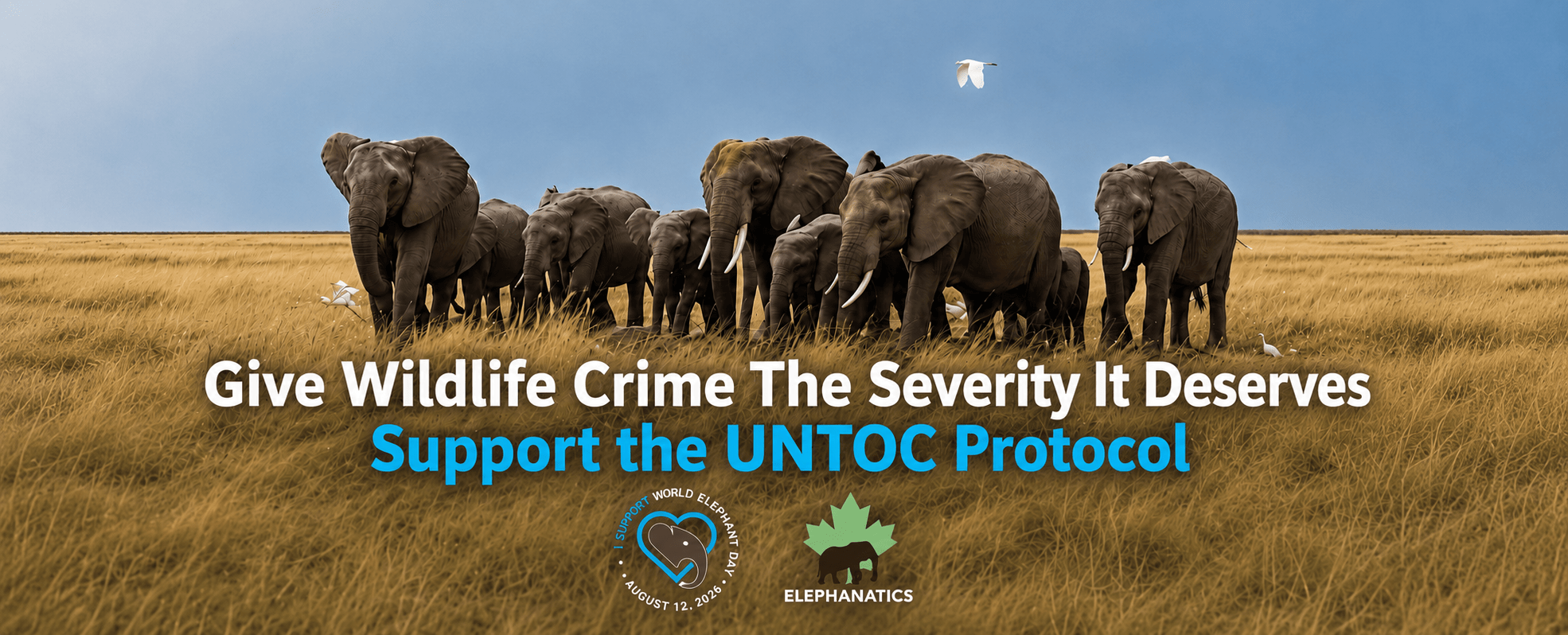
Empowering youth to speak up for wildlife: Our Back-to-School launch

Empowering Tomorrow’s Change-Makers Today 🍁🐘

As students across British Columbia return to the classroom this September, Elephanatics, in partnership with World Elephant Day, is launching our most crucial educational initiative yet: the Wildlife Crime Civic Action Student Toolkit.

Wildlife trafficking is one of the most lucrative transnational crimes in the world, threatening keystone species like African elephants and destabilizing fragile ecosystems. Real change requires systemic international policy—and our youth have a vital role to play in driving that conversation.

Why This Matters to Every Single One of Us 🌍

It is easy to view wildlife trafficking strictly as an animal welfare issue, but wildlife crime is environmental crime. Elephants and other keystone species are the vital pillars holding entire ecosystems together—ecosystems that produce our clean air, store carbon, maintain soil health, and protect global water cycles.

When criminal syndicates strip ecosystems of their natural biodiversity, they accelerate ecological collapse, increase human exposure to zoonotic diseases, and threaten local communities dependent on natural resources. Fighting for a global UNTOC Wildlife Crime Protocol isn’t just about protecting iconic species; it is about defending the natural systems that sustain human life and safeguarding our shared planet against organized environmental destruction.

A Free, Hands-On Resource for Secondary Classrooms 📚

Designed for Grades 6–12 Science, Social Studies, and English Language Arts, this interdisciplinary resource connects classroom learning directly with real-world civic engagement.

Through engaging modules, students will explore:

  • 🌾 Environmental Crime & Ecosystems: How transnational wildlife trafficking destabilizes global ecosystems, economic security, and public health.

  • 🌐 Organized Crime Syndicates: How multi-billion-dollar criminal networks exploit legal gaps across international borders.

  • ✍️ Civic Action & Democracy: The power of democratic participation through targeted advocacy letter-writing to Canadian government leaders.

Why the Timing Matters

This October, world leaders are gathering for a major global summit on international organized crime. Ahead of this critical summit, Canadian students have a unique window of opportunity to make their voices heard by writing directly to decision-makers and Members of Parliament, advocating for stronger global laws to shut down wildlife trafficking networks.

How You Can Help Drive Immediate Impact 🚀

Whether you are an educator, parent, or supporter, here is how you can help us reach classrooms this fall:

  • 📣 Share the Toolkit with Teachers: Pass our free curriculum package along to secondary educators, science coordinators, or school principals in your community.

  • 📥 Download the Materials: Explore the lesson plan and letter-writing guides directly on our website.

  • 🌐 Spread the Word: Share our campaign link on social media to build momentum.

👉 Access the Free UNTOC Student Toolkit Here: https://elephanatics.org/untoc-toolkit/#BTS

Thank you for continuing to stand with us as we empower the next generation of global citizens to protect our planet’s wildlife.

Warm regards,

Fran Duthie

President, Elephanatics

Fellow, Royal Canadian Geographical Society

Elephanatics May 2025 Newsletter

A Gentle Rumble from Elephanatics 

Greetings Elephant Enthusiasts!

In Vancouver, the days are getting longer, bursting with spring green, and across the globe magnificent elephants continue their ancient journeys. Elephanatics works hard to encourage education about these amazing creatures within schools, the community, and online. We believe that understanding these incredible creatures is the first step towards protecting them. Join us as we explore the fascinating world of elephants!

This Month’s Focus: The Power of Memory

Elephants are renowned for their incredible memories, and it’s more than just folklore! Their complex social structures and survival depend heavily on their ability to remember vital information.

  • Watering Holes and Migration Routes: Elephants can recall the locations of distant watering holes and traditional migration paths, knowledge passed down through generations. This is crucial for navigating vast landscapes and surviving in challenging environments.
  • Social Bonds: They recognize family members and other individuals within their social groups, even after long separations. This memory underpins their intricate social lives and cooperative behaviours.
  • Threat Recognition: Elephants can remember specific threats, such as the scent or appearance of predators or past encounters with humans, allowing them to react appropriately and protect themselves and their young.
  • Learning and Adaptation: Young elephants learn essential survival skills by observing and remembering the actions of their elders, highlighting the importance of matriarchal knowledge.

Did You Know? Studies have shown that elephants can even differentiate between the voices and scents of different human groups, potentially remembering those who pose a threat versus those who are harmless.

Conservation Corner: Understanding Habitat Loss

One of the biggest threats facing elephants today is the loss and fragmentation of their natural habitats. This month, we want to shed light on why this is so critical:

  • Shrinking Spaces: As human populations grow and land is converted for agriculture, infrastructure, and development, the areas available for elephants to roam freely are shrinking.
  • Increased Conflict: Habitat loss often leads to increased encounters between elephants and humans, resulting in conflict over resources and safety for both.
  • Disrupted Migration: When traditional migration routes are blocked, elephants can be cut off from vital resources like water and food, impacting their survival.
  • Ecosystem Impact: The loss of elephant habitat also has a ripple effect on entire ecosystems, as elephants play a crucial role in maintaining biodiversity. They are a keystone species.

Upcoming Events:

  • Our African Elephant Specialist, Dr Rene Beyers, will be giving an online presentation May 23, with Exploring by the Seat of Your Pants, VP of Education, Jesse Hildebrand. Don’t miss this exciting educational broadcast on Rewilding and its global importance in saving wildlife and ecosystems!

Wildlife Conservation Conferences / Symposiums coming up in May and July:

  • Canadian Environmental Crime Symposium (CECRN) (May 8th and 9th – 9am-5:30EDT) Launch of the first CECRN. Presented online or in person. Topics include transnational environmental crime, organized crime and environmental crime convergences, poaching, trafficking, crime journalism and more. Registration is free. https://lnkd.in/ere2pB2S
  • Global Conference on Environmental and Biological Science (GCEBS) (May 16-18, 2025): Taking place in Vancouver, Canada. This conference covers a broad range of topics, including conservation biology and biodiversity conservation. To be held at The University of British Columbia, located at 800 Robson Street, Vancouver, BC V6Z 3B7, Canada, in Room C215. 
  • Annual International Conference of the Wildlife Disease Association (July 27 – August 1, 2025): This conference focuses on wildlife health and its connection to conservation. Held at 720 Douglas St, Victoria BC, V8W 3M7, Canada.

What Can You Do? Supporting organizations like Elephanatics helps fund initiatives that work to protect and restore elephant habitats through anti-poaching efforts, community engagement, and advocating for conservation policies such as rewilding. 

Get Involved!

  • Share the Knowledge: Help us spread awareness by sharing this newsletter and facts about elephants with your friends and family.
  • Follow Us on Social Media: Stay up-to-date with our latest news, photos, and educational content on Facebook / Instagram / Threads / X and our website elephanatics.org
  • Join our community of dedicated elephant advocates! We need volunteers of all kinds! Contact us @ elephanatics.org/volunteer
  • Consider a Donation: Your contribution, no matter the size, directly supports our educational programs and conservation efforts. Visit elephanatics.org/donate
  • OR donate to the Fran Duthie African Elephant Scholarship. The goal of this scholarship is to provide financial support to Kenyan nationals acquiring a technical certificate, undergraduate or postgraduate (Masters or PhD) degree in an area related to conservation and the protection of wildlife. Donations go to maraelephantproject.org/donate

Thank you for continuing to be a vital part of Elephanatics community. Together, we can ensure a future where elephants thrive.

Until next time, enjoy the longer days and sunshine!

The Team at Elephanatics
elephanaticsinfo@gmail.com