What Happened to Protecting Elephants and Rhinos?


“Elephants are not human, of course. They are something much more ancient and primordial, living on a different plane of existence. Long before we arrived on the scene, they worked out a way of being in the world that has not fundamentally changed and is sustainable, and not predatory or destructive.” 
 
Alex Shoumatoff


One might question why humanity continues to be a formidable and increasingly detrimental threat to nature, while nature continues to be the only hope left for our survival. The phrase, ‘cut off your nose to spite your face,’ comes to mind. 

Undeniably, humankind has never fathomed the nuances required to sustain a viable and healthy world, but rather has created an ecological and environmental conundrum that will be the demise of our species and many other species, unless immediate action is taken to reverse this deleterious trend. Elephants and many other wildlife species are becoming extinct from the increased threat of habitat loss and the illegal wildlife trade mainly due to humanity’s ignorance.  

In March 2022, the Canadian government mandated to end the elephant ivory and rhinoceros horn trade and work with partners to curb the illegal wildlife trade in Canada. We are still waiting for action to be taken on this initiative. The following information reaffirms the necessity to get this mandate done as soon as possible:

In a report by the International Monetary Fund (IMF) Finance and Development department, the carbon value of a single forest elephant is worth $1.75 million dollars. Elephants help mitigate climate change by maintaining forest and savannah ecosystems for other species and are integrally tied to rich biodiversity.

In a study done by Yale school of the Environment on climate change, Professor Oswald J. Schmitz states, “Wildlife species, throughout their interaction with the environment, are the missing link between biodiversity and climate. This interaction means rewilding can be among the best nature-based climate solutions available to humankind.” 

The data in this study showed that protecting or restoring wildlife populations could collectively facilitate the additional capture of 6.41 billion tons of carbon dioxide annually. This is 95% of the amount needed every year to meet the Paris Agreement target of removing enough carbon from the atmosphere to keep global warming below the 1.5-degree Celsius threshold. The health of our planet is ultimately dependent on healthy biodiversity and ecosystems globally.

To be certain, the elephant ivory trade dates back to the 14th century. During the colonization of Africa, approximately 800 to 1,000 tonnes of ivory was sent to Europe every year to be used for making piano keys, billiard balls, and other usages. By the 1970’s Japan consumed approximately 40% of the global trade and another 40% was consumed by Europe and North America. 

Fast forward to today and China has become the largest consumer of ivory products in the world where the vast majority of smuggled ivory—experts say as much as 70 percent—ends up. With increased economic growth, a wealthy Chinese middle class has fuelled the demand for luxury ivory products and although seizures of illegally obtained ivory take place, much of the smuggled ivory still gets through. The Convention on International Trade of Endangered Species (CITES) reports that nearly all the current demand for elephant ivory comes from the Chinese market.

In March of 2021, the African forest elephant, Loxodonta cyclotis, was listed as critically endangered and the African savanna elephant, Loxodonta africana, as endangered on the International Union for Conservation of Nature (IUCN) Red List of Threatened Species. The causes are identified as poaching for ivory in the short term and habitat loss in the longer term. The number of African forest elephants fell by more than 86% over a period of 31 years, while the population of African savanna elephants decreased by at least 60% over the last 50 years. The Red List continues to classify the Asian elephant as endangered with as little as 52,000 left in the wild.  

According to an IUCN Report, approximately 111,000 elephants were lost between 2006-2015 leaving an estimated 415,500. In the last forty years, elephant habitat has decreased by nearly two thirds largely due to human activities.

A paper led by the Mara Elephant Project’s Director of Research and Conservation Dr Jake Wall, discovered that human activity largely shapes the behaviour and distribution of modern elephants. 62% of Africa has suitable habitat for elephants, but the animals use just 17% of that habitat and are absent – for now – in the remaining 83%.

Along with poaching, the demand for rhino horn is highly sought after for Traditional Chinese Medicine use. The trade of TCM using body parts of IUCN red-listed animals must be regulated. Additionally, new research by Vincent Nijman, Professor in Anthropology at Oxford Brookes University states, “With three out of four newly emerging infectious human diseases originating in animals, there is an urgent need to monitor the legal trade in wildlife… given that in many instances the legal wildlife trade is several orders of magnitude larger than the illegal trade, it is ineffective and possibly dangerous to focus on the illegal wildlife trade only.” Pandemics will continue as long as the legal trade in wildlife goes unabated.

Consequently, wildlife trafficking has quickly become a multi-billion-dollar transnational criminal activity that is not only a conservation issue but also a security threat. It is ranked as the fourth most profitable transnational crime, only behind the drug trade, arms trade and human trafficking. During the pandemic, there was a significant shift toward online sales of ivory, particularly on eBay and social media.

In May of 2022 the UN moved closer towards tackling the illegal wildlife trade. The UN Commission on Crime Prevention and Criminal Justice (CCPCJ) adopted an historic resolution. Angola, Kenya, and Peru submitted the draft resolution in April. It was titled ‘Strengthening the international legal framework for international cooperation to prevent and combat illicit trafficking in wildlife.’ It called on the UN Office on Drugs and Crime (UNODC) to consider the benefits of adopting an additional protocol in the UN Convention against Transnational Organized Crime (UNTOC). 

This additional protocol would be specifically about preventing and combating the illegal wildlife trade. Current protocols in UNTOC cover the trafficking and smuggling of people, and the manufacturing and trafficking of arms. This is a step in the right direction!

Furthermore, in February of 2023, a new public-private partnership, targeting the global black market in wild animals and their body parts, was initiated by Scotiabank and FINTRAC, which encourages  information sharing between financial institutions, conservation groups, and financial intelligence units in Canada, South Africa, Australia, the U.K and elsewhere. This is a huge initiative and targets the middlemen responsible for illicit wildlife trafficking. 

Money laundering plays a significant role in the illegal wildlife trade with criminals looking for an easy way to move whatever commodity they can to make a profit. Sam Cooper, Canadian investigative journalist and founder of The Bureau says that international law enforcement have identified networks of hunting junket operators in Canada, Latin America, Africa and Australia, intertwined with fentanyl traffickers and Chinese state actors. Cooper said illegal wildlife hunting and trafficking facilitate laundering of drug cash and movement of narcotics for gang bosses, but junket operators also use illegal big game hunting as a social networking tool, gathering gangsters, corrupt officials, and state actors. “Vice and profit go hand-in-hand in these international crime and corruption networks,” Cooper said. 

While strong law enforcement initiatives are imperative to curb the illegal wildlife trade, the fact remains that habitat loss, poaching, human-elephant conflict, trophy hunting, and the legal ivory trade are still enormous threats contributing to elephant population declines and their survival.

We continue to encourage the Canadian government to follow through with its mandate as a matter of urgency and we ask that you do the same.

Please Take Action to make sure the government fulfills its obligation and stops stalling on its commitments. 

 “In the end … success or failure will come down to an ethical decision, one on which those now living will be judged for generations to come.”   Edward O. Wilson

Fran Duthie
President / Co-Founder
Elephanatics

TAKE ACTION

TAKE ACTION – The Future of Elephants and Rhinos Depends On Us!

The Canadian government has committed to do its part in helping save these iconic and majestic animals by ending the elephant ivory and rhino horn trade in Canada. But time is running out and extinction is not an option.

Please urge the Government of Canada to fulfill its mandate to end the elephant ivory and rhino horn trade in Canada:

1.) sign letter https://bit.ly/38pmlSn

2.) sign petition change.org/IvoryFreeCanada

For an #IvoryFreeCanada

Rewilding Day – March 20th

Rewilding Humanity

“May Man and Beast
succeed to coalesce harmoniously,
in the forests, the seas, and land,
with ner’er a compromise from Nature.”
fd

There is a tragic urgency in the world today for the necessity to compromise. Compromises for wildlife. Compromises for nature. But, above all else, the ability to compromise humanity’s own platitudes for the sake of Mother Earth. David Attenborough said it best, “Nature once determined how we survive, now we determine how nature survives.” Only by compromising will we find an equilibrium that will provide a solution to prevent critical mass extinction of wildlife and our own species.

Rewilding is a concept that has gained larger recognition worldwide because of the irreparable damage caused by humans to wild spaces that were once occupied by species responsible for healthy ecosystems and biodiversity. Conservationists understand the frailty of our existence and the connection between nature and mankind as synergistic. Therefore, if the basis of rewilding be to govern all natural processes, then it must be said that the basis of rewilding humanity be at its core.

What is rewilding and why do we need it?

Rewilding is a progressive form of conservation that restores and rebalances ecological areas that have suffered from overuse and abuse from humans, allowing nature to repair itself through natural processes with as little human interference as possible. It helps ecosystems rebuild diversity, structure and resilience. It is imperative for all life on Earth to have healthy, regulated ecosystems to counter the extinction crisis, preserve biodiversity, and help mitigate human-made climate change.

Rewilding consists of 3 major success categories: Cores, Corridors and Carnivores.

Cores are wild spaces linked up by corridors that enable carnivores, or other keystone species, to be reintroduced to areas where they once roamed, and now have the opportunity to flourish and regenerate ecosystems that were once part of the landscape. Corridors are natural or man-made strips of land connecting cores and serving as an avenue for wild animals to move across to reach food, water and cover. Increasing habitat fragmentation has put these essential movements at risk.

Large predators play a key role in regulating ecosystems. By connecting core areas through natural corridors, big predators can reach wild land networks.

Generally speaking, populations of wild animals are naturally regulated. There are two forms of food regulation. One form of is bottom-up control – meaning the flow of energy and nutrients from the soil through to the plants to the herbivores and on up to the predators. Another form is top-down control where predators control herbivores or other smaller predators (predation), which indirectly affects plants and even soils, referred to as a trophic cascade. Elephants are plant predators – a top-down control (food regulation) of plants and trees in the ecosystems in which they live. In the savannah elephants affect tree populations by eating small seedlings thus preventing trees from returning keeping the vegetation open. One of the most frequent causes of ecosystem collapse is the loss of top predators. Human hunting, urban development and agriculture has prevented regulation of herbivores by top predators by displacing or killing them causing a chain reaction in the food chain.

In any ecosystem, the loss of a keystone species results in a loss of biodiversity at other levels in the food chain. Elephants have decreased by nearly two-thirds largely because of human activities in the past 40 years and because elephants are a keystone species, this has greatly affected the ecosystems in which they live and all the other animals that depend upon them for survival. A principal driver for the decline and extinction of a species is the loss of their habitat. An important pillar of rewilding is the reintroduction of keystone species to areas that have been degraded in order to rebuild stability and diversity.

Rewilding is a complex and intricate process of re-establishing ecosystems to the original form had human disturbances not occurred. Long-term monitoring is essential in tracking rewilding programs. By having a long-term goal it allows scientists to track a systems progress and intervene if it deviates because of external threats such as poaching.

So, how does all this pertain to humanity and its role in the extinction crisis and what constructive tactics could we practice in order to assist the rewilding concept?

It is a disheartening fact to know that 96% of the mass of mammals on the planet today are humans and the livestock we have domesticated. Only 4 % is everything else, meaning wildlife is at the bottom of the barrel. 70% of all birds are domesticated poultry, mainly chickens. The speed at which species are disappearing is at least 100 times higher than the natural rate of extinction. At the current rate it will take millions of years for diversity to be restored to pre-industrial levels. How do we halt this tsunami?

If we were to say that humanity’s success is governed, largely, by 3 major success categories to include competence, commitment, and collaboration, we could discern and conflate the principles of rewidling with our own principles of humanity. We could also broaden the categories to include; compassion, conscience, culture, community, and co-existence.

From the beginning of time, mankind has been ingenious and competent enough to protect itself from extinction. But, we have reached a global population growth of 8+ billion people that are pillaging the earth’s resources at mammoth speed. A commitment to evaluate our consumption practices and place nature at the top of our list of collaborators is imperative for all survival on earth and a true test for humanity. Are we competent enough to succeed? Our sub categories of success, to include compassion and conscience, will need to place an emphasis on rewilding humanity as its primary goal in order for rewilding nature to be successful. Cultural norms will need to be reevaluated, and educational programs in communities and schools will need to be organized to teach the importance of co-existence with nature as our primary connection and means to survival. It is encouraging to know that some conservation organizations are focusing on the importance of rewilding and making it their primary objective.

We are bound, intrinsically, to nature. From the elephant that tramples copious amounts of seeds in the forest that, in turn, nourishes life in ecosystems, to the stars we gaze at with wonderment, in the night sky, that are part of our DNA. Compromises are urgent proponents to change that humans are irrevocably responsible for in order for rewilding to succeed and humanity to continue to exist.

The truth is, nature does not compromise. We must.


Below are some suggestions on how to ‘Rewild Humanity’ and top reasons why we should:

  • Animal agriculture is responsible for 91% of Amazon destruction. If we all ate less meat, there would be more space for wildlife to flourish. Fewer crops would be needed to feed livestock. infographic: https://www.cowspiracy.com/infographic

Top reasons why we need to rewild:

  • To stop mass extinction
  • To bolster biodiversity and stabilize climate on which we all depend
  • To prevent natural disasters
  • To increase economies of scale for communities
  • To help people by securing high levels of biodiversity


Fran Duthie,
President / Elephanatics


*All rewilding statistics listed above accredited to “A Place Like No Other”
author, Anthony R.E. Sinclair, with Rene Beyers, director, Elephanatics

Classroom Presentations at Art and Play Foundation!

Our student ambassador, Muskan, gave two informative and insightful presentations to the children attending the Art Therapy Program at Kids Play Foundation in Surrey last Saturday.  The kids learned about the many faceted roles the elephant plays in keeping ecosystems in which they live healthy and their role as a keystone species. Lots of giveaways and fun was had by all.

Thank you, Muskan, for your great work. The elephants trumpet!!


Elephants and Biodiversity – How are they connected? NEW Lesson Plan!

Elephants and Biodiversity – How are they connected? NEW LESSON PLAN!

"Elephanatics Foundation - Free elephant conservation lesson plans, toolkits for teachers, and persuasive essay resources."The decline of elephant populations due to the illegal wildlife trade and poaching is now almost the stuff of legendary horror. While elephants roamed the forests and savannas of Africa in the millions in the past, the 20th century has seen an accelerated assault on their lives with populations declining from 10 million in the early 1900s to approximately 450,000 today.

While poaching threats continue unabated, climate change, biodiversity loss, and human wildlife conflict are equally as threatening to the long-term survival of Africa’s elephant populations.

Elephants are at the crossroads of multiple human system failures. In Kenya, 200 elephants died recently due to the drought bringing elephants in closer conflict with humans competing for limited resources.  As a keystone species the loss or potential extinction of elephants will have devastating consequences for ecosystems dependent on them for their survival, driving a circle of degradation for all species, including humans.

How do we emerge from this human created mess? Elephanatics is committed to providing resources and education for people of all ages, with the intention of helping people understand that elephants, like the rest of the natural world, are an integral part of a broader ecology that help form the fabric of ecosystems essential to our collective survival. In Elephanatics’ latest lesson plan “Biodiversity and the Important Role of the African Elephant,” students from grades four to twelve will learn how to:

  • Correctly use appropriate science vocabulary to include – biodiversity, keystone species, natural community, interrelationships, and characteristics.
  • Describe interrelationships between the African elephant and their environment. Using pictures and words, explain why the African elephant is a keystone species.
  • Identify human-caused species loss as one of the major current threats to biodiversity.
  • Explain how the disappearance of the African elephant affects other species.

Link to lesson plan here.

View all our lesson plans here.   All plans can be modified to suit grade appropriateness.

With a commitment to supporting education for future generations on the importance of protecting wildlife and biodiversity, we hope to ensure the long-term survival of Africa’s remaining population of extraordinary wild elephants.

African Elephant Conservation Scholarship Update

Elephanatics is proud to support Kenyan students pursuing an education in conservation through the Fran Duthie African Elephant Conservation Scholarship distributed by Mara Elephant Project in Kenya.  February 11th is International Day of Women and Girls in Science and we are very excited to support Janeth Jepkemboi as the first recipient of the scholarship. 
Janeth is pursuing her master’s in environmental science. She just completed her first semester, which encouraged her passion for conservation even more. 

Please consider a donation today (“note in the comments “scholarship”) to support Janeth and other Kenyans preparing for a career in conservation, buff.ly/3WNTgH8.

Keep up the great work, Janeth!


Donation to Wildlife Friends Foundation Thailand!

It is with great pleasure that we are able to donate to Wildlife Friends Foundation in Thailand to help them continue their outstanding work and care of elephants and other wildlife at their sanctuary.

The major goals of their organization are:

  • To rescue and rehabilitate captive wild animals and provide high-quality care and a safe environment for them to live for the rest of their lives, in a setting as close to nature as possible.
  • To campaign against all forms of animal abuse and exploitation in Thailand, work towards ending the illegal pet trade and discourage people from keeping all wild animals as pets. WFFT actively seeks to combat the illegal wildlife trade and to rescue animals from poor conditions or exploitation from human entertainment.
  • To provide veterinary assistance to any sick or injured animal; wild or domestic.
  • To educate and encourage local people (especially children), tourists and the international community to appreciate, understand and protect wildlife and their natural habitats. One of the most significant aspects of wildlife conservation is the education of local communities and raising awareness among tourists, who often inadvertently create a big demand for the exploitation of wildlife. WFFT wishes to make people understand the consequences of their actions and aims to persuade them to change their habits and attitudes towards life. If the buying stops the killing will too.  Tours are given to tourists at the rescue centre with the aim of raising awareness for the plight of the animals in promoting responsible eco-tourism
  • To assist in and develop new projects relating to protection, rehabilitation, humane captive environments, and welfare of all wild animals.
  • To rehabilitate captive wild animals and release them back into the wild, repopulating forest areas in which they are already endangered or extinct.

Thank you for your commitment and care of wildlife.

Elephanatics funds donated to the elephant Refuge – https://www.wfft.org/projects/elephant-refuge/

Please visit their website at: https://www.wfft.org/ for more information.


Giving Tuesday November 29th


It’s Giving Tuesday November 29th

This #GivingTuesday we are asking you to help support the work of Elephanatics to build conservation educational capacity in Kenya by donating to the Fran Duthie African Elephant Conservation Scholarship held with Mara Elephant Project, an African conservation organization in Kenya dedicated to protecting elephants and their habitats.

The scholarship provides financial support to Kenyan nationals acquiring a technical certificate, undergraduate or postgraduate (Masters or PhD) degree in an area related to conservation and the protection of wildlife.

Janeth Jepkemboi was the first ever recipient of the scholarship.

Janeth began her master’s program at Karatina University studying environmental science. Janeth’s parents worked hard to put her through high school, and she helped by doing fundraisers. To pursue her undergraduate degree, she took out loans and worked throughout. Janeth was an exceptional candidate for this scholarship.

“My undergraduate studies in environmental studies made me passionate about conservation and I love connecting with nature. This scholarship is an opportunity for me to gain skills and academic excellence that I will use after as I envision working with a conservation organization and being at a level where I can influence policy to safeguard livelihoods while still protecting biodiversity values. This scholarship will be a great opportunity to realize my dreams and be an asset to the community.”

Janeth’s first semester consists of 7 units to include Conservation & Planning of Biological Resources, Environment & Development, among others. She is currently working on numerous assignments and term papers and will be writing her end of semester exams in January. We wish her every success and know she will do well.

The future of our wildlife depends on students, such as Janeth, to bring innovative change to conservation methods and modalities. We are all interdependent on nature for our own survival. Please consider investing in students who will provide the expertise necessary to make these changes.

 Donate Here

* Please state in the comments section under ‘Donate Now’ that you would like your money deposited to the “Fran Duthie Scholarship”.


Help Support Elephants

It’s #WorldElephantDay August 12th!

DONATE TODAY * Donations to Elephanatics will be sent to SEEDBALLS Kenya to purchase seedballs for @MaraElephantProject in the Maasai Mara, Kenya.

We Are Excited!

Elephanatics has recently partnered with SEEDBALLS Kenya!

SEEDBALLS Kenya is an African based organization that has pioneered a method of mass producing seedballs for low cost and efficient reintroduction of trees and grass species into degraded areas in Africa.

What is a seedball? A Seedball is simply that – a seed inside of a ball of charcoal dust mixed with some nutritious binders. SEEDBALLS Kenya focuses on helping reduce the cost of planting various useful indigenous plant species (mostly trees and grass) in Kenya. The biochar coating of the ball helps protect the seed within from predators such as birds, rodents and insects and extremes of temperature until the rains arrive! Once soaked, the seedball helps retain and prolong a moist environment around the seed to encourage germination. Seedballs are a nature-based solution to biodiversity and ecosystem loss.

Human activity is degrading ecosystems and driving biodiversity loss faster than ever before. The speed at which species are disappearing is at least 100 times higher than the natural rate of extinction. If we don’t stop this, at the current rate it will take millions of years for diversity to be restored to pre industrial levels. Africa is suffering from an unprecedented decline in biodiversity due to extensive agricultural practices, population growth, illicit wildlife trafficking, development, and more. In the last forty years, elephant habitat has decreased by nearly two thirds largely due to human activities.

We are happy to promote the outstanding work SEEDBALLS Kenya does in assisting with restoring and reforesting areas of Africa hardest hit by habitat destruction.

Please join us this World Elephant Day and Donate to Propagate! 

For more information on SEEDBALLS Kenya go to: https://www.seedballskenya.com/seedballs

DONATE TODAY * Donations to Elephanatics will be sent to SEEDBALLS Kenya to purchase seedballs for @MaraElephantProject in the Maasai Mara, Kenya.


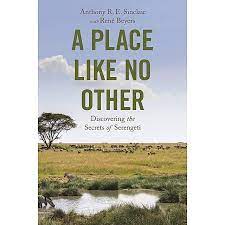
Just Released “A Place Like No Other”

A BIG Congratulations to Dr. Rene Beyers and Professor Tony Sinclair on their recent publication of “A Place Like No Other” by Princeton University Press.

“A Place Like No Other” is Anthony Sinclair’s firsthand account of how he and other scientists discovered the biological principles that regulate life in the Serengeti and how they rule all of the natural world. Co-authored with Dr. Rene Beyers.

A must read and a wonderful gift for the holiday season ahead!

https://lnkd.in/gD2BcRpk

#Rewilding #Biodiversity #Ecology #Ecosystems #climatechange #endangeredspecies #Serengeti #conservationeducation #conservation