Elephanatics Newsletter September 2025

Back to School Edition

At Elephanatics Foundation, we’re committed to educating the next generation. We believe that fostering a deep understanding of elephants—their vital role as a keystone species and their status as iconic mammals crucial to local and global ecosystems—is the cornerstone for building the next generation of future conservationists.

Elephanatics Education Resources for Teachers | Educators | Homeschools 

To better support teachers and students, we have created new, updated, and personalized lesson plans tailored for elementary and secondary educators. Access our full range of elementary and intermediary lesson plans, designed for both Canadian and US curriculums, with a simple click!  Available below for immediate download:

  • For elementary and secondary school educators – bring a wildlife ranger or elephant researcher into your classroom! To find out more click here.
  • Check out our lesson plans on elephant ecology and action! Click here to learn more. 
  • NEW! Request  a teacher to do a virtual presentation in your classroom! Pick a special day like #WorldElephantDay  #WorldWildlifeDay or #EarthDay to make it even more impactful! Or, just pick any day that suits you!

On behalf of the Fran Duthie (Elephanatics) African Elephant Conservation Scholarship, Mara Elephant Project is thrilled to welcome four incredible young conservation champions into the herd!
These four candidates were chosen not only for their passion and drive, but also because they represent the communities Mara Elephant Project partners with to protect wildlife and their habitats. Amos and Faith are from the Loita area and are passionate about its preservation. Additionally, Sarah and Robert are from key operational areas in the Mara where the community is critical to supporting MEP’s coexistence efforts. Together, they represent the future of conservation, leaders driven by resilience, passion, and a vision for thriving communities and wild spaces. Congratulations, Faith Leuka,  Amos Baari,  Robert Muli and Sarah Loiman!
Read more about their journeys here.


A huge, heartfelt thank you to everyone who joined us in celebrating #WorldElephantDay with a donation!
This year, Elephanatics was honored to partner with the Mara Elephant Project (MEP), an organization on the front lines of elephant conservation in Kenya, Africa. Our shared goal was to raise awareness and critical funds for the Loita Forest in Kenya, a lush and biodiverse habitat that is not only home to a thriving elephant population but also a sanctuary for many other rare and endangered species.
Our initial target was to raise $1,200, and we are beyond grateful to share that with a generous dollar-for-dollar match from Elephanatics, we completely surpassed that goal!
Your contributions will directly fund the Mara Elephant Project’s crucial on-the-ground efforts—from anti-poaching patrols that keep elephants safe, to community-led programs that resolve human-wildlife conflicts. Every dollar donated will be put to work immediately, ensuring the guardians of this forest have the resources they need to protect this precious ecosystem.
Thank you for being an essential part of the solution where together we are helping to protect and build a world where elephants and all wildlife can thrive.


Conservation and Technology

Can Tech Turn the Tide on Wildlife Crime? 

As one of the world’s most profitable international crimes, the illicit wildlife trade generates billions in revenue each year. The criminal syndicates responsible for poaching and illegal resource extraction are highly organized and well-funded. Find out how scalable innovation is being used as a strategic tool to effectively counter this global threat. Read more here.

Interested in supporting our work? Click here to donate.

Thank you for your support!

ELEPHANATICS TEAM

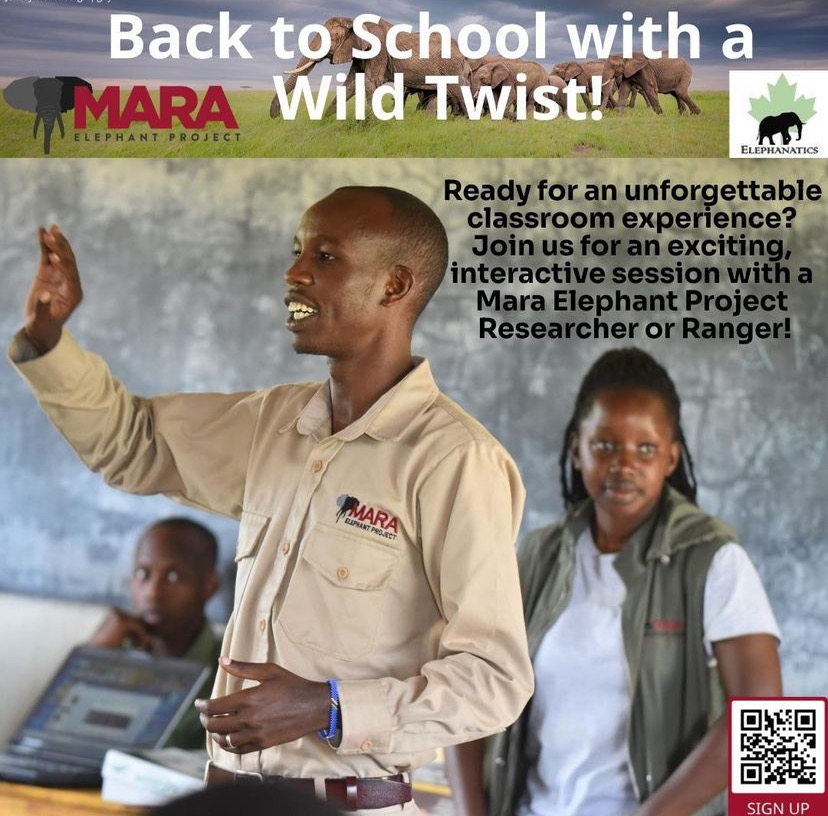
BRING A WILDLIFE RANGER OR RESEARCHER INTO YOUR CLASSROOM!

It’s Back To School and we have some great news for all educators!

Elephanatics and Mara Elephant Project are offering educators a unique opportunity to invite via Zoom a Mara Elephant Project ranger or researcher into your classroom. Students will have the chance to interact with a Kenyan conservationist and learn more about the work they are doing to protect elephants and their habitats in the Greater Mara Ecosystem.

Go to link below to book your spot today and share with fellow friends, teachers and educators!

"Elephanatics Foundation - Free elephant conservation lesson plans, toolkits for teachers, and persuasive essay resources."

Educational Resources

#EarthDay2023 #InvestInOurPlanet

#EarthDay is April 22nd. What are your plans to #TakeAction and #InvestInOurPlanet?
For the next 4 days we will share our initiatives and offer some helpful suggestions on how you can support our beautiful blue planet!
The theme for Earth Day 2023 is “Invest In Our Planet.” This year’s theme focuses on engaging governments, institutions, businesses, and the more than 1 billion citizens who participate annually in Earth Day to do their part — “everyone accounted for, everyone accountable.”
Some Ideas to get you started:
• Help support pollinators such as mason bees:
• Start your own neighbourhood plastic clean up initiative by:
1.) Avoiding single-use plastics such as straws and plastic take
out containers
2. Not forgetting your cloth bag to go shopping
3. Replacing plastic food storage containers with glass or steel containers.
• Plant a Tree! But not just any tree. Check with your local garden store or arborist for a tree that will benefit your local ecosystems
• Use Wildflowers and Native Plants
• Reduce pesticides in the garden
• Reuse old pots in the garden
• Recycle water in the garden
• REWILD- Some suggestions in this article: https://bit.ly/3Ldawlh

Rewilding Day – March 20th

Rewilding Humanity

“May Man and Beast
succeed to coalesce harmoniously,
in the forests, the seas, and land,
with ner’er a compromise from Nature.”
fd

There is a tragic urgency in the world today for the necessity to compromise. Compromises for wildlife. Compromises for nature. But, above all else, the ability to compromise humanity’s own platitudes for the sake of Mother Earth. David Attenborough said it best, “Nature once determined how we survive, now we determine how nature survives.” Only by compromising will we find an equilibrium that will provide a solution to prevent critical mass extinction of wildlife and our own species.

Rewilding is a concept that has gained larger recognition worldwide because of the irreparable damage caused by humans to wild spaces that were once occupied by species responsible for healthy ecosystems and biodiversity. Conservationists understand the frailty of our existence and the connection between nature and mankind as synergistic. Therefore, if the basis of rewilding be to govern all natural processes, then it must be said that the basis of rewilding humanity be at its core.

What is rewilding and why do we need it?

Rewilding is a progressive form of conservation that restores and rebalances ecological areas that have suffered from overuse and abuse from humans, allowing nature to repair itself through natural processes with as little human interference as possible. It helps ecosystems rebuild diversity, structure and resilience. It is imperative for all life on Earth to have healthy, regulated ecosystems to counter the extinction crisis, preserve biodiversity, and help mitigate human-made climate change.

Rewilding consists of 3 major success categories: Cores, Corridors and Carnivores.

Cores are wild spaces linked up by corridors that enable carnivores, or other keystone species, to be reintroduced to areas where they once roamed, and now have the opportunity to flourish and regenerate ecosystems that were once part of the landscape. Corridors are natural or man-made strips of land connecting cores and serving as an avenue for wild animals to move across to reach food, water and cover. Increasing habitat fragmentation has put these essential movements at risk.

Large predators play a key role in regulating ecosystems. By connecting core areas through natural corridors, big predators can reach wild land networks.

Generally speaking, populations of wild animals are naturally regulated. There are two forms of food regulation. One form of is bottom-up control – meaning the flow of energy and nutrients from the soil through to the plants to the herbivores and on up to the predators. Another form is top-down control where predators control herbivores or other smaller predators (predation), which indirectly affects plants and even soils, referred to as a trophic cascade. Elephants are plant predators – a top-down control (food regulation) of plants and trees in the ecosystems in which they live. In the savannah elephants affect tree populations by eating small seedlings thus preventing trees from returning keeping the vegetation open. One of the most frequent causes of ecosystem collapse is the loss of top predators. Human hunting, urban development and agriculture has prevented regulation of herbivores by top predators by displacing or killing them causing a chain reaction in the food chain.

In any ecosystem, the loss of a keystone species results in a loss of biodiversity at other levels in the food chain. Elephants have decreased by nearly two-thirds largely because of human activities in the past 40 years and because elephants are a keystone species, this has greatly affected the ecosystems in which they live and all the other animals that depend upon them for survival. A principal driver for the decline and extinction of a species is the loss of their habitat. An important pillar of rewilding is the reintroduction of keystone species to areas that have been degraded in order to rebuild stability and diversity.

Rewilding is a complex and intricate process of re-establishing ecosystems to the original form had human disturbances not occurred. Long-term monitoring is essential in tracking rewilding programs. By having a long-term goal it allows scientists to track a systems progress and intervene if it deviates because of external threats such as poaching.

So, how does all this pertain to humanity and its role in the extinction crisis and what constructive tactics could we practice in order to assist the rewilding concept?

It is a disheartening fact to know that 96% of the mass of mammals on the planet today are humans and the livestock we have domesticated. Only 4 % is everything else, meaning wildlife is at the bottom of the barrel. 70% of all birds are domesticated poultry, mainly chickens. The speed at which species are disappearing is at least 100 times higher than the natural rate of extinction. At the current rate it will take millions of years for diversity to be restored to pre-industrial levels. How do we halt this tsunami?

If we were to say that humanity’s success is governed, largely, by 3 major success categories to include competence, commitment, and collaboration, we could discern and conflate the principles of rewidling with our own principles of humanity. We could also broaden the categories to include; compassion, conscience, culture, community, and co-existence.

From the beginning of time, mankind has been ingenious and competent enough to protect itself from extinction. But, we have reached a global population growth of 8+ billion people that are pillaging the earth’s resources at mammoth speed. A commitment to evaluate our consumption practices and place nature at the top of our list of collaborators is imperative for all survival on earth and a true test for humanity. Are we competent enough to succeed? Our sub categories of success, to include compassion and conscience, will need to place an emphasis on rewilding humanity as its primary goal in order for rewilding nature to be successful. Cultural norms will need to be reevaluated, and educational programs in communities and schools will need to be organized to teach the importance of co-existence with nature as our primary connection and means to survival. It is encouraging to know that some conservation organizations are focusing on the importance of rewilding and making it their primary objective.

We are bound, intrinsically, to nature. From the elephant that tramples copious amounts of seeds in the forest that, in turn, nourishes life in ecosystems, to the stars we gaze at with wonderment, in the night sky, that are part of our DNA. Compromises are urgent proponents to change that humans are irrevocably responsible for in order for rewilding to succeed and humanity to continue to exist.

The truth is, nature does not compromise. We must.


Below are some suggestions on how to ‘Rewild Humanity’ and top reasons why we should:

  • Animal agriculture is responsible for 91% of Amazon destruction. If we all ate less meat, there would be more space for wildlife to flourish. Fewer crops would be needed to feed livestock. infographic: https://www.cowspiracy.com/infographic

Top reasons why we need to rewild:

  • To stop mass extinction
  • To bolster biodiversity and stabilize climate on which we all depend
  • To prevent natural disasters
  • To increase economies of scale for communities
  • To help people by securing high levels of biodiversity


Fran Duthie,
President / Elephanatics


*All rewilding statistics listed above accredited to “A Place Like No Other”
author, Anthony R.E. Sinclair, with Rene Beyers, director, Elephanatics

Grade 3’s Shout It Out For Elephants!

San Diego – March, 2023
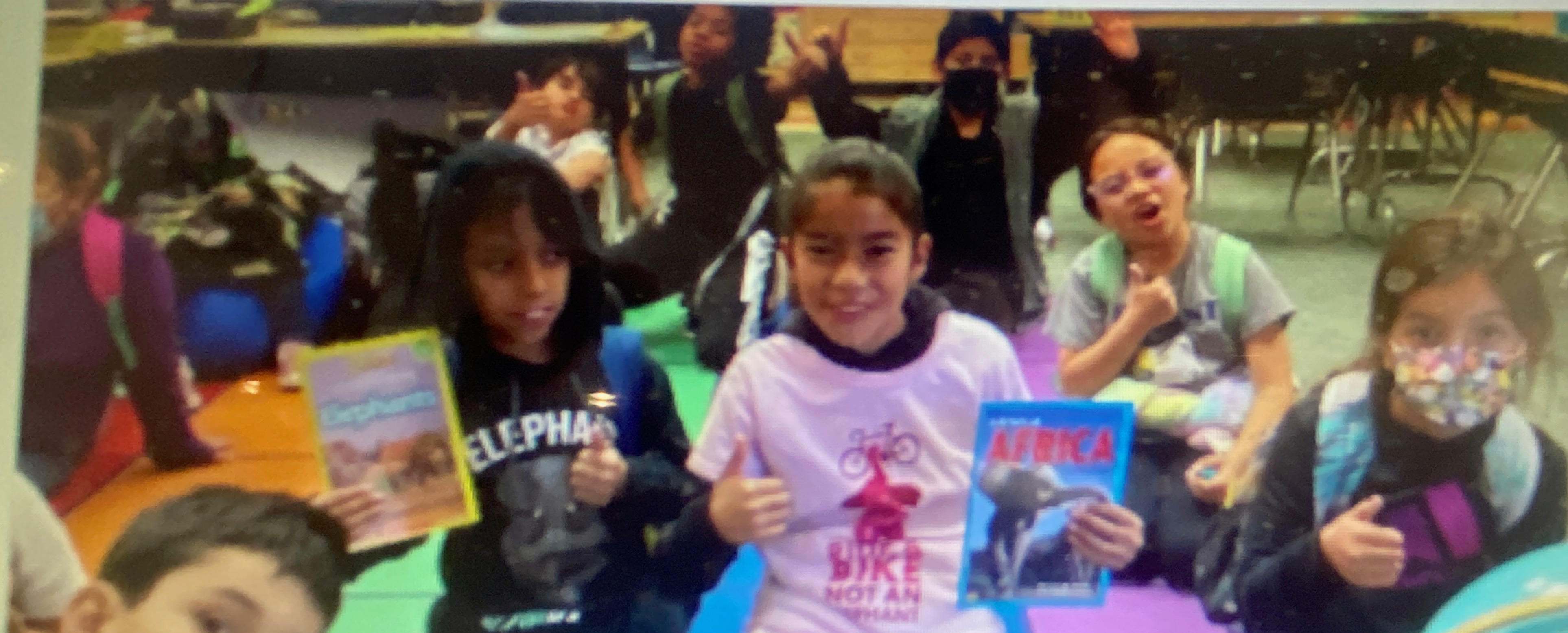
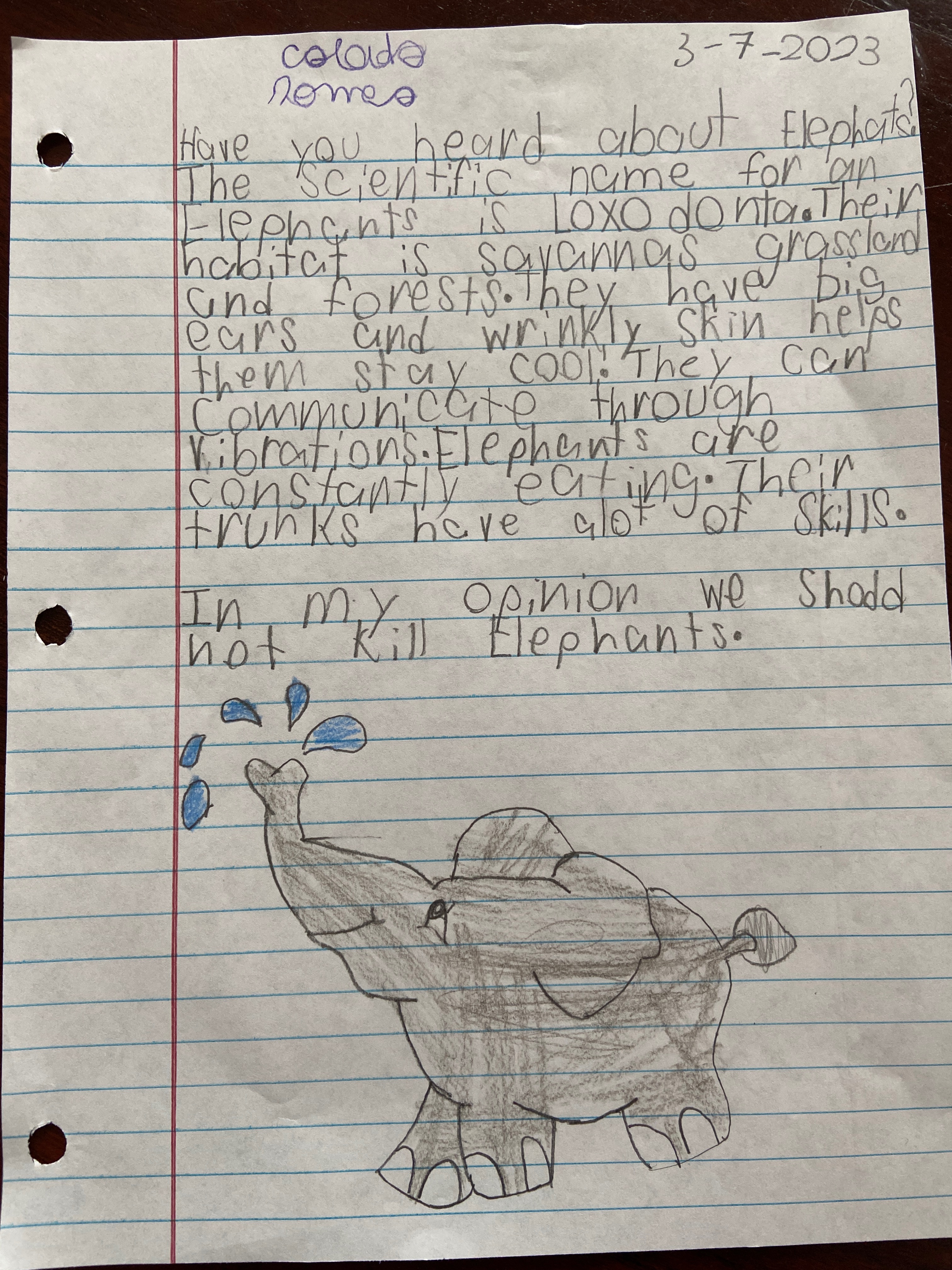
A BIG Thank You to Ms. Cynthia’s Grade 3 class for being such eager learners and lovers of elephants! Determined to make a difference for elephants they held a fundraiser for Elephanatics to stop them from becoming extinct from poaching and human elephant conflict.
We are so very grateful for their enthusiasm and for the opportunity to deliver a presentation to their classroom. 🐘
Can’t wait to go back! Watch video here –  IMG_8451

Student Takes A Stand For Elephants!

Calling All Students!

We are so pleased to share our student volunteer’s blog, “Help Save the Enchanted Elephant.” Dhanvin is a grade 10 student attending Kwantlen Park Secondary School in Surrey. From his experience growing up in Asia, he has a keen sense of the need to protect this valuable species. We thank him for his time and efforts at promoting the work we do as an organization at his school.

Help Save the Enchanted Elephant

(My teacher giving an info session on Effects of Elephant Poaching)

May 9th, 2022

Hi, my name is Dhanvin. I am a grade 10 student attending Kwantlen Park Secondary School in Surrey, BC, Canada. I have offered to volunteer with Elephanatics – an elephant advocacy organization based in Vancouver – to help spread awareness about the crises facing both the African and Asian elephant and the necessity to help save these majestic animals.

Growing up in Asia I have a deep connection with Elephants. I have admired these fascinating creatures since my childhood. Elephants play a significant role in my culture. I had the privilege to touch and ride on one. I vividly remember riding on a 20-year-old Asian elephant. It felt magical riding on this magnificent creature. Riding over 7 feet high through a thick green luscious forest gave me the opportunity to reflect and reconnect with nature. This is one of my favourite memories that I will cherish all my life. Little did I know at the time that riding elephants is not good for them and can cause unnecessary pain to their backs. After reading about unethical tourism, I realized I needed to make others aware that in order to ride elephants they have to go through a horrible procedure to become tame called, ‘Phajaan’ or ‘the crush’. It means to break their spirit and they are beaten to become domesticated. Unethical tourism is a big problem and needs to end.

African and Asian elephants are powerful, compassionate and magnificent animals. They are also ecosystem engineers, playing a critical role in shaping the natural environments where they live. Ecosystems are a complicated web where animals and plants depend on each other for survival. Ecosystems have been developing and evolving for eons. It is depressing to see humans wreck these fascinating systems in just a few decades. Disrupting the balance of ecosystems can threaten human life existence on earth. In spite of the efforts from some governments, the number of African forest elephants fell by more than 86% over a period of 31 years. The African Forest Elephant is Critically Endangered and the African Savannah Elephant is Endangered and on the International Union for Conservation of Nature (IUCN) Red List of Threatened Species.

The Asian Elephant is listed as Endangered because of a population reduction to be at least 50% over the last three generations. The biggest threat to Asian and African elephants now is habitat loss and fragmentation.

Some of the main reasons threatening the existence of elephants include:

Poaching

Elephants are most vulnerable to poaching for ivory and bush meat. Unfortunately, many people take pride in hunting elephants. Over the past 200-years ivory has become increasingly valuable. At the beginning ivory was collected from dead elephants but it pains me to say that many innocent elephants are now killed to make jewellery. It is tragic that human greed kills these creatures. I feel great sorrow looking at the unfortunate poaching events involving elephants. Recent studies show elephants have begun evolving without their beautiful tusks. Approximately thirty thousand elephants are killed every year due to poaching.

Climate change

Humans have become the most disruptive species on earth. With continuous expansion in human settlements there is a significant impact on our climate. Degrading climatic conditions are ruining the habitats of many animals and elephants are one of the most prominent species impacted. Their forests and grasslands have been cut down to expand cities and agricultural demands. Elephants are a keystone species and play a huge part in the worlds biodiversity.

Human Elephant Conflict

Expanding settlement boundaries have caused elephants to wander into human settlements. This has led humans to take drastic measure to protect their families and crops. According to WWF (World Wide Fund for Nature) over 100 people and 50-80 elephants are killed in this conflict every year. It is upsetting to see humans disrupt the delicate balance and co-existence between all species.

It is not too late to stop this destruction. In my opinion education is the best way of spreading awareness. With education we can pass on a better world to our successive generations. Although I am unable to go and help the elephants in person myself, I want to sensitize others. I have been volunteering with Elephanatics for over three months. They have given me access to a wide variety of insightful learning resources. These resources have been invaluable in helping me spread awareness in my school community by distributing the lesson plans to my teachers. My social studies teacher loved the idea of including the lesson plan and he was able to share these insightful resources with his colleagues and present a lesson plan to his students.

I have tried to start a club and organize fundraiser, I was turned down by my school admin, but I did not give up and I tried by best to spread the awareness and encourage my peers in supporting this cause. I believe I can make a difference and give our future generation an opportunity to see these stunning creatures.

If you love elephants and want to help save them, please join me in spreading the word about the crises facing elephants by sharing Elephanatics petition to end the domestic trade of elephant ivory in Canada – over 687,000 people have signed this petition making it one of the largest petitions in Canada.

#IvoryFreeCanada

Thank you and I hope you will join me in trying to help these magnificent creatures.

You can contact me at:

Dhanvinraj12@gmail.com

or, feel free to contact Elephanatics at: elephanaticsinfo@gmail.com

Dhanvin