#WorldEnviornmentDay June 5th, 2023 #BeatPlasticPollution

June 5th is #WorldEnvironmentDay

The theme of World Environment Day 2023 is to focus on solutions to plastic pollution. #BeatPlasticPollution 

Plastic is being consumed in large amounts by elephants primarily in Asia and India largely due to increased population growth which has caused habitat loss, fragmentation, and forced elephants to search for food in unhealthy places.

As this video  will explain, in Sri Lanka alone, elephants have been found to consume enormous amounts of plastic from toxic waste sites causing them a horrific painful death. In India, elephants consume plastics from nearby village dumps and transport them deep into forests. 

85 percent of waste found in elephant dung in the town of Kotdwar, India, was plastic. This has a cascading effect on other animals feeding off their dung and is a leading concern of what the effects of plastic are on land ecosystems. 

Because elephants are prolific seed dispersers and a keystone species responsible for the ecosystems in which they live, plastic is a grave danger to all species involved in the chain reaction.

The Organization for Economic Co-operation and Development (OECD) has stated that the amount of plastic that is produced annually is set to triple by 2060, driven by rising populations and income. 

In their report they propose concrete policies that can be implemented along the lifecycle of plastics that could significantly curb, or even eliminate, plastic leakage into the environment. What can we all do to expedite some of the initiatives and policies outlined in this report? 

Set a personal #Goal to help end #PlasticConsumption and #BeatPlasticPollution 

  • Adopt a circular lifestyle. … meaning reuse the waste that you produce instead of filling up landfills and oceans and exploiting raw materials.
  • Rethink your fashion and laundry choices…buy second hand.
  • Make sure your toiletries are plastic-free.
  • Say “no” to plastic when shopping. … take your own bag!!
  • Don’t accept plastic containers for takeout … approach owner of business and encourage them to purchase cardboard takeaway containers … a great example of environmental, social, and governance strategy (ESG) is Snooze, a restaurant who has been a leader in ESG for years. Support restaurants like this who are making necessary transitions for a healthier planet!
  • Roll up your sleeves and get cleaning. … volunteer with an organization who does plastic clean up.
  • Recycle!
  • Join the UN Environment Programme’s (UNEP’s) Clean Seas campaign.
  • Support an elephant conservation organization – Elephanatics – whose core values and beliefs are:

SustainabilityEnvironmental and social sustainability are our core values and is reflected in    the work we do and how we do it.
Professionalism – Being transparent, accountable, and responsible for all we do within      our organization and how we project that through the work we do.
Community – Our community of social media followers, partners, and volunteers are key      components in achieving our goals of spreading awareness and holding fundraising events. Education is key to change and must be done in a compassionate, environmentally friendly, manner.

Enjoy World Environment Day by setting a goal to make the world a better place for all of us, especially elephants! 


#EarthDay #InvestInOurPlanet

The Canadian Federal Government Fails to Hold Canadian Companies Accountable Overseas

The Okavango River Basin covers 125,000 square miles across Angola, Botswana and Namibia and is home to the largest remaining population of African elephants, lions, leopards, rhinos, giraffe, African buffalo, and hundreds of species of birds. Its vast water system transforms what could be one of the driest areas in the world to a biodiversity hotspot hosting a vibrant landscape.  In 2014 it became a Unesco World Heritage site.

While humanity faces the dual calamities of biodiversity loss and the impacts of a rapidly heating climate, the urgent need to safeguard biodiversity rich places such as the Okavango River Basin becomes more urgent.

The WWF Living Planet report shows that wildlife populations have declined by 69% over the last 50 years.

Indeed, while elephants roamed the forests and savannas of Africa in the millions in the past, the 20th century has seen an accelerated assault on their lives with populations declining from 10 million in the early 1900s to approximately 450,000 today. Climate change, human wildlife conflict, and poaching continue to devastate elephant populations.

As Canadians, why is it important that we act expeditiously to help protect the Okavango Delta from intrusions that would devastate this region?

We know that the world we inhabit is deeply interconnected. We are one planet.

The destruction of the Amazon forest impacts us all. The destruction of the Okavango Delta impacts us all.

The systems humans built have led us to this state of multiple crises. Now we must rebuild a path forward reprioritizing the needs of the planet as an interconnected place where the importance of flora and fauna are equally considered in economic development.

RECON AFRICA

Recon Africa is a small Canadian oil and gas-based exploration company that has begun drilling for oil and gas in this pristine basin. The news of its discovery increased share prices making a bundle for investors. The track record of Recon Africa has been suspect from the start, including stock manipulation, which has recently been extensively documented in Rolling Stone, and the Globe and Mail.

WHY SHOULD CANADIANS CARE?

The Canadian government cares about climate change. We know this because Canada signed on to the Paris Climate Agreement in 2016 pledging to reduce its greenhouse gas emissions by 30% below 2005 levels by 2030.

The Canadian government cares about biodiversity loss and is signatory to the first-ever biodiversity agreement. Among Canada’s main goals are protecting 30% of lands and waters by 2030, respecting the rights and roles of Indigenous peoples, and addressing the key drivers of biodiversity loss, such as pollution and overexploitation of nature. These elements were agreed upon in the final Framework.

With these large public commitments, it’s clear that Canada intends to play a leadership role on the global stage. In the recent federal budget the government committed millions to help industry and Canada transition to clean energy in response to the US Inflation Reduction Act.

CLOSE THE GAPCanada does not have meaningful and enforceable oversight of how its corporations behave overseas, helping to ensure that collectively we will continue to fail our climate and biodiversity loss goals.

EMPOWER THE CANADIAN OMBUDSPERSON FOR RESPONSIBLE ENTERPRISE  

Canada is home to many companies in the extractive sector, including over half of the worlds publicly listed mining companies. In 2018 CORE was launched to hold accountable laggard companies operating overseas. Although initially lauded as a big step toward corporate accountability that would hold mining and oil and gas companies accountable in extra territorial jurisdiction, in the last four years not a single case has been completed, meaning there have been zero investigations or reviews finished in CORE’s 4 years of operations.

Human rights and environmental groups have taken their complaints and concerns regarding Recon Africa’s corporate behavior to the RCMP and to unresponsive government departments.

Acting swiftly to close this gap would prevent 120 billion barrels of oil or 51.6 Gigatonnes of CO2, the equivalent of one sixth of the world’s remaining carbon budget, into the atmosphere.

It won’t matter what we do here if rogue resource sector businesses continue a trajectory of corporate malfeasance in other countries.

OPPORTUNITY AND NEXT STEPS

The Canadian government needs to give CORE the legal framework, power and resources to meaningfully hold companies accountable for environmental and human rights abuses in other countries.

Canada has the opportunity to lead the clean energy transition in Africa. Close the gaps and get serious about talking about climate change and protecting biodiversity. Everyone benefits from that.

Tessa Vanderkop

VP – Elephanatics

TAKE ACTION

TAKE ACTION – The Future of Elephants and Rhinos Depends On Us!

The Canadian government has committed to do its part in helping save these iconic and majestic animals by ending the elephant ivory and rhino horn trade in Canada. But time is running out and extinction is not an option.

Please urge the Government of Canada to fulfill its mandate to end the elephant ivory and rhino horn trade in Canada:

1.) sign letter https://bit.ly/38pmlSn

2.) sign petition change.org/IvoryFreeCanada

For an #IvoryFreeCanada

Grade 3’s Shout It Out For Elephants!

San Diego – March, 2023
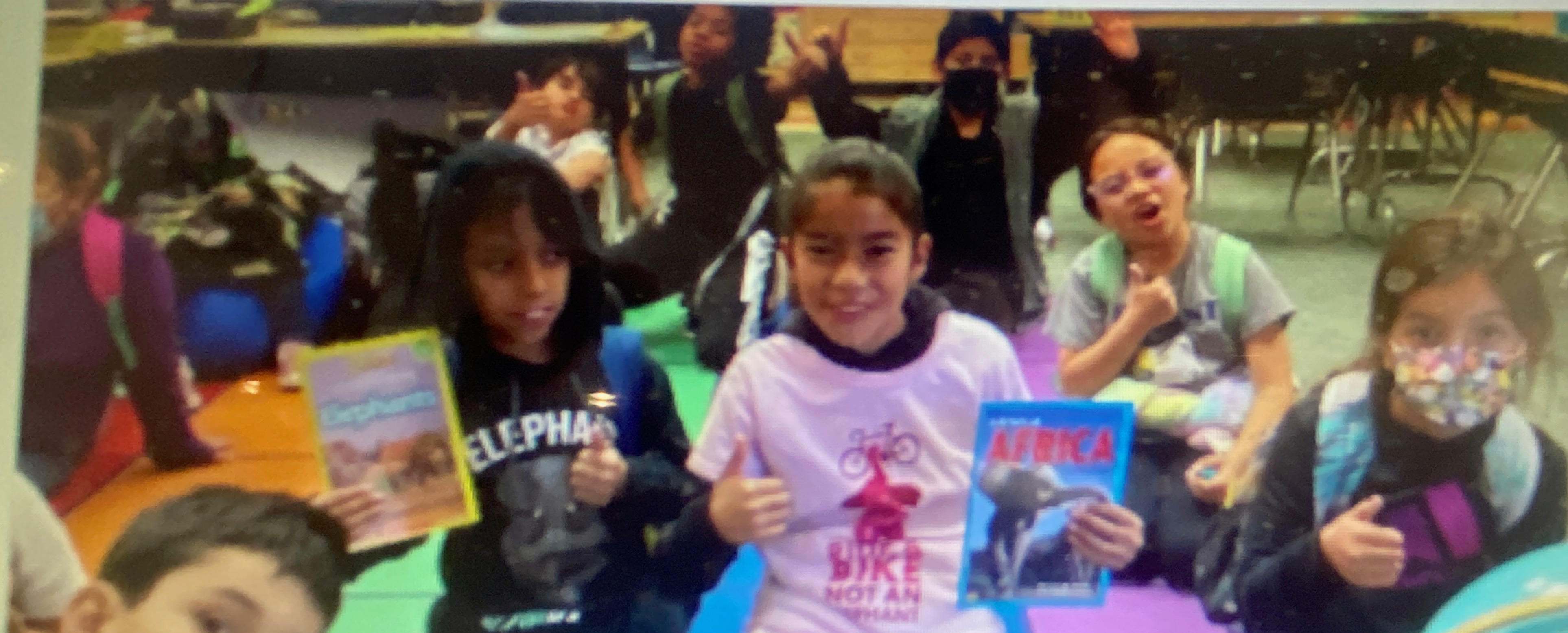
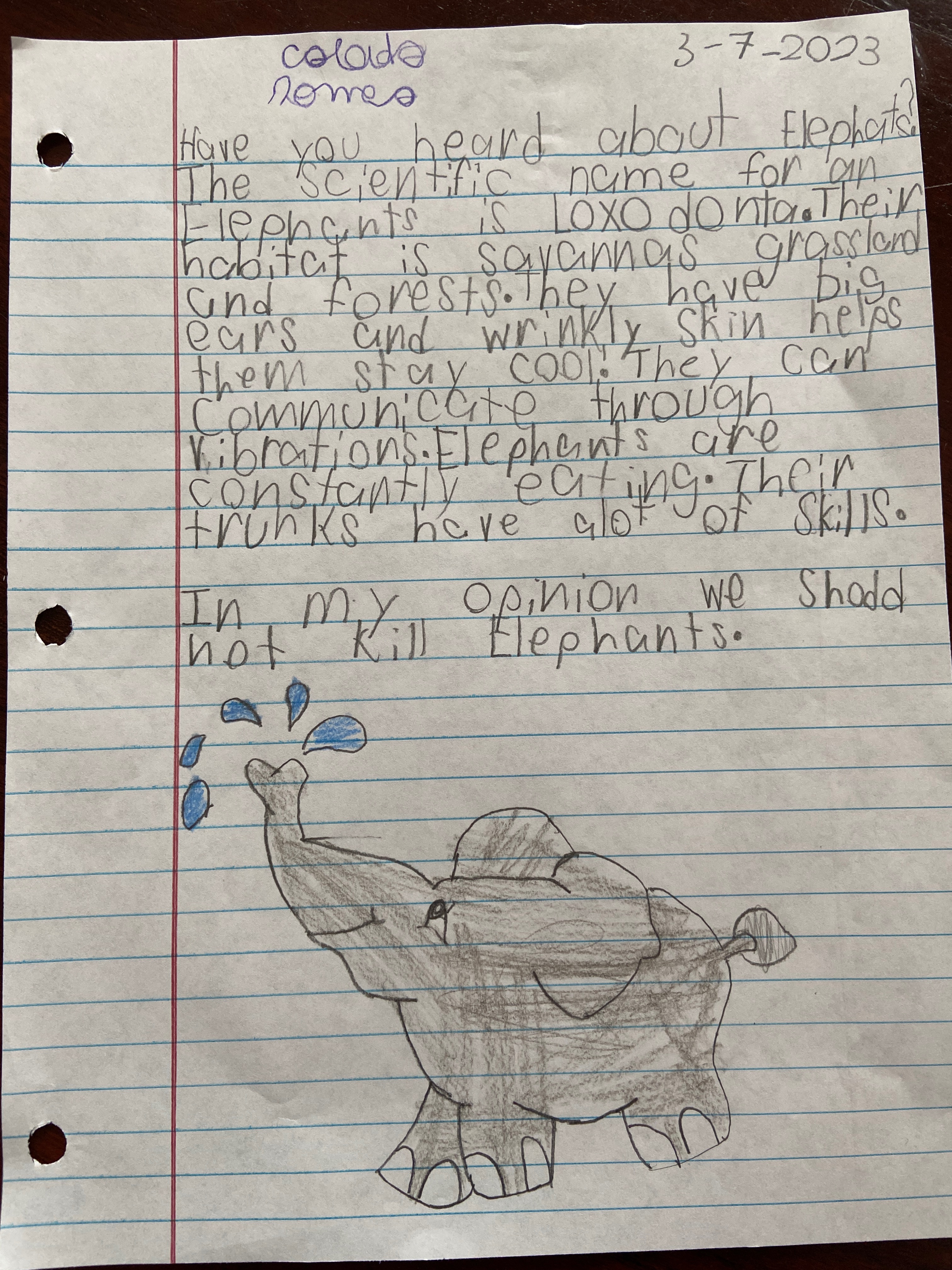
A BIG Thank You to Ms. Cynthia’s Grade 3 class for being such eager learners and lovers of elephants! Determined to make a difference for elephants they held a fundraiser for Elephanatics to stop them from becoming extinct from poaching and human elephant conflict.
We are so very grateful for their enthusiasm and for the opportunity to deliver a presentation to their classroom. 🐘
Can’t wait to go back! Watch video here –  IMG_8451

Classroom Presentations at Art and Play Foundation!

Our student ambassador, Muskan, gave two informative and insightful presentations to the children attending the Art Therapy Program at Kids Play Foundation in Surrey last Saturday.  The kids learned about the many faceted roles the elephant plays in keeping ecosystems in which they live healthy and their role as a keystone species. Lots of giveaways and fun was had by all.

Thank you, Muskan, for your great work. The elephants trumpet!!


Elephants and Biodiversity – How are they connected? NEW Lesson Plan!

Elephants and Biodiversity – How are they connected? NEW LESSON PLAN!

"Elephanatics Foundation - Free elephant conservation lesson plans, toolkits for teachers, and persuasive essay resources."The decline of elephant populations due to the illegal wildlife trade and poaching is now almost the stuff of legendary horror. While elephants roamed the forests and savannas of Africa in the millions in the past, the 20th century has seen an accelerated assault on their lives with populations declining from 10 million in the early 1900s to approximately 450,000 today.

While poaching threats continue unabated, climate change, biodiversity loss, and human wildlife conflict are equally as threatening to the long-term survival of Africa’s elephant populations.

Elephants are at the crossroads of multiple human system failures. In Kenya, 200 elephants died recently due to the drought bringing elephants in closer conflict with humans competing for limited resources.  As a keystone species the loss or potential extinction of elephants will have devastating consequences for ecosystems dependent on them for their survival, driving a circle of degradation for all species, including humans.

How do we emerge from this human created mess? Elephanatics is committed to providing resources and education for people of all ages, with the intention of helping people understand that elephants, like the rest of the natural world, are an integral part of a broader ecology that help form the fabric of ecosystems essential to our collective survival. In Elephanatics’ latest lesson plan “Biodiversity and the Important Role of the African Elephant,” students from grades four to twelve will learn how to:

  • Correctly use appropriate science vocabulary to include – biodiversity, keystone species, natural community, interrelationships, and characteristics.
  • Describe interrelationships between the African elephant and their environment. Using pictures and words, explain why the African elephant is a keystone species.
  • Identify human-caused species loss as one of the major current threats to biodiversity.
  • Explain how the disappearance of the African elephant affects other species.

Link to lesson plan here.

View all our lesson plans here.   All plans can be modified to suit grade appropriateness.

With a commitment to supporting education for future generations on the importance of protecting wildlife and biodiversity, we hope to ensure the long-term survival of Africa’s remaining population of extraordinary wild elephants.

Donation to Wildlife Friends Foundation Thailand!

It is with great pleasure that we are able to donate to Wildlife Friends Foundation in Thailand to help them continue their outstanding work and care of elephants and other wildlife at their sanctuary.

The major goals of their organization are:

  • To rescue and rehabilitate captive wild animals and provide high-quality care and a safe environment for them to live for the rest of their lives, in a setting as close to nature as possible.
  • To campaign against all forms of animal abuse and exploitation in Thailand, work towards ending the illegal pet trade and discourage people from keeping all wild animals as pets. WFFT actively seeks to combat the illegal wildlife trade and to rescue animals from poor conditions or exploitation from human entertainment.
  • To provide veterinary assistance to any sick or injured animal; wild or domestic.
  • To educate and encourage local people (especially children), tourists and the international community to appreciate, understand and protect wildlife and their natural habitats. One of the most significant aspects of wildlife conservation is the education of local communities and raising awareness among tourists, who often inadvertently create a big demand for the exploitation of wildlife. WFFT wishes to make people understand the consequences of their actions and aims to persuade them to change their habits and attitudes towards life. If the buying stops the killing will too.  Tours are given to tourists at the rescue centre with the aim of raising awareness for the plight of the animals in promoting responsible eco-tourism
  • To assist in and develop new projects relating to protection, rehabilitation, humane captive environments, and welfare of all wild animals.
  • To rehabilitate captive wild animals and release them back into the wild, repopulating forest areas in which they are already endangered or extinct.

Thank you for your commitment and care of wildlife.

Elephanatics funds donated to the elephant Refuge – https://www.wfft.org/projects/elephant-refuge/

Please visit their website at: https://www.wfft.org/ for more information.


Chapter 26 from Routledge Handbook of Rewilding

Chapter 26|10 pages –  Routledge Handbook of Rewilding – publication Nov/22

* Rewilding, the wildlife trade and human conflict

By Rene Beyers, Sally Hawkins

This chapter examines the relationships between conflict, wildlife trade, and rewilding. Trade in wildlife, both legal and illegal, has increased exponentially in the last few decades, which has led, at least in part, to the decimation of numerous wildlife species, including keystone species that have an important role in the functioning of ecosystems. This affects trophic cascades, leading to the degradation of ecosystems and decreased ecosystem services. Conflict and civil strife have also been increasing globally. In most cases conflict results in a decline of species mainly through increased trade in wildlife for food and revenue, habitat degradation, and a breakdown in law and order. If rewilding is to be effective in restoring trophic cascades and ecosystem functioning, addressing the social and ecological impacts of conflict and wildlife trade should be seen as an integral part of rewilding. Interventions may include controlling trade and hunting, involving local communities, promoting sustainable wildlife use and curbing illegal wildlife trade.

To purchase book please go to: https://bit.ly/3WsxB64


Just Released: Routledge Handbook of Rewilding

At the start of the UN #Biodiversity #COP15 taking place in Montreal from Dec 7-16, we are very excited to announce the launch of the Routledge Handbook of Rewilding!
The Handbook is edited by founding members (including Rene Beyers of Elephanatics) of the #IUCN Rewilding Thematic Group and written by more than 60 distinguished experts offering a large diversity of experiences and perspectives.
The book is an invaluable resource for conservation students, academics, rewilding practitioners, policy makers and anyone interested in the restoration of degraded ecosystems. Conservation practitioners who want to integrate rewilding principles into their conservation programs will also highly benefit from this book.
#Rewilding is a fascinating and rapidly emerging field with the goal of helping degraded ecosystems recover and become healthy, resilient, persistent and self-sustaining systems with no or minimal human interference. Rewilding also offers a transformational paradigm shift in the way we think about our relationship with nature. The four sections in the book give a comprehensive overview of key areas of rewilding including: the history of rewilding, ecological theory and practice, rewilding ethics and philosophy. The book gives a global perspective, drawing on case studies from across the world.
Buy yours today at: https://bit.ly/3uyB2ww

CITES CoP19 Letter to MP’s

October 15, 2022

Dear Member of Parliament,

We are a coalition of organizations calling for urgent action to be taken at the upcoming CITES-CoP19 taking place in Panama City, Panama, November 14-25. (https://cites.org/eng/cop19).

We oppose:

a.) The proposal to CITES by Zimbabwe at the upcoming convention to amend Annotation 2 pertaining to the populations of Botswana, Namibia, South Africa and Zimbabwe as specified here: https://cites.org/sites/default/files/documents/E-CoP19-Prop-04_1.pdf

b.) The proposal by Namibia and Botswana to transfer Namibia’s population of southern white rhinos from Appendix I to Appendix II to facilitate trophy hunting and live animal trade for in-situ conservation purposes, as specified here: https://cites.org/sites/default/files/eng/cop/19/prop/as_received/E-Ceratotherium_simum_simum-Namibia.pdf

We support:

The proposal by Burkina Faso, Equatorial Guinea, Mali, and Senegal to transfer African Elephant populations in Botswana, Namibia, South Africa and Zimbabwe from Appendix ll to Appendix l.1

https://cites.org/sites/default/files/eng/cop/19/prop/as_received/E-Loxodonta_africana-Transfer_App_I.pdf

Read full letter here: Dear Member of Parliament