Tag: education
Giving Tuesday November 29th
It’s Giving Tuesday November 29th
This #GivingTuesday we are asking you to help support the work of Elephanatics to build conservation educational capacity in Kenya by donating to the Fran Duthie African Elephant Conservation Scholarship held with Mara Elephant Project, an African conservation organization in Kenya dedicated to protecting elephants and their habitats.
The scholarship provides financial support to Kenyan nationals acquiring a technical certificate, undergraduate or postgraduate (Masters or PhD) degree in an area related to conservation and the protection of wildlife.
Janeth Jepkemboi was the first ever recipient of the scholarship.
Janeth began her master’s program at Karatina University studying environmental science. Janeth’s parents worked hard to put her through high school, and she helped by doing fundraisers. To pursue her undergraduate degree, she took out loans and worked throughout. Janeth was an exceptional candidate for this scholarship.
“My undergraduate studies in environmental studies made me passionate about conservation and I love connecting with nature. This scholarship is an opportunity for me to gain skills and academic excellence that I will use after as I envision working with a conservation organization and being at a level where I can influence policy to safeguard livelihoods while still protecting biodiversity values. This scholarship will be a great opportunity to realize my dreams and be an asset to the community.”
Janeth’s first semester consists of 7 units to include Conservation & Planning of Biological Resources, Environment & Development, among others. She is currently working on numerous assignments and term papers and will be writing her end of semester exams in January. We wish her every success and know she will do well.
The future of our wildlife depends on students, such as Janeth, to bring innovative change to conservation methods and modalities. We are all interdependent on nature for our own survival. Please consider investing in students who will provide the expertise necessary to make these changes.
* Please state in the comments section under ‘Donate Now’ that you would like your money deposited to the “Fran Duthie Scholarship”.
African Elephant Conservation Scholarship distributed by Mara Elephant Project!
We are excited to announce that Janeth Jepkemboi is the first ever recipient of the Fran Duthie African Elephant Conservation Scholarship distributed by Mara Elephant Project. Janeth is beginning her master’s program at Karatina University studying environmental science. Janeth’s parents worked hard to put her through high school, and she helped by doing fundraisers. To pursue her undergraduate degree, she took out loans and worked throughout. Janeth was an exceptional candidate for this scholarship generously supported by Fran Duthie and her family.
“My undergraduate studies in environmental studies made me passionate about conservation and I love connecting with nature. This scholarship is an opportunity for me to gain skills and academic excellence that I will use after as I envision working with a conservation organization and being at a level where I can influence policy to safeguard livelihoods while still protecting biodiversity values. This scholarship will be a great opportunity to realize my dreams and be an asset to the community.”
Help Support Elephants
It’s #WorldElephantDay August 12th!
DONATE TODAY * Donations to Elephanatics will be sent to SEEDBALLS Kenya to purchase seedballs for @MaraElephantProject in the Maasai Mara, Kenya.
We Are Excited!
Elephanatics has recently partnered with SEEDBALLS Kenya!
SEEDBALLS Kenya is an African based organization that has pioneered a method of mass producing seedballs for low cost and efficient reintroduction of trees and grass species into degraded areas in Africa.
What is a seedball? A Seedball is simply that – a seed inside of a ball of charcoal dust mixed with some nutritious binders. SEEDBALLS Kenya focuses on helping reduce the cost of planting various useful indigenous plant species (mostly trees and grass) in Kenya. The biochar coating of the ball helps protect the seed within from predators such as birds, rodents and insects and extremes of temperature until the rains arrive! Once soaked, the seedball helps retain and prolong a moist environment around the seed to encourage germination. Seedballs are a nature-based solution to biodiversity and ecosystem loss.
Human activity is degrading ecosystems and driving biodiversity loss faster than ever before. The speed at which species are disappearing is at least 100 times higher than the natural rate of extinction. If we don’t stop this, at the current rate it will take millions of years for diversity to be restored to pre industrial levels. Africa is suffering from an unprecedented decline in biodiversity due to extensive agricultural practices, population growth, illicit wildlife trafficking, development, and more. In the last forty years, elephant habitat has decreased by nearly two thirds largely due to human activities.
We are happy to promote the outstanding work SEEDBALLS Kenya does in assisting with restoring and reforesting areas of Africa hardest hit by habitat destruction.
Please join us this World Elephant Day and Donate to Propagate!
For more information on SEEDBALLS Kenya go to: https://www.seedballskenya.com/seedballs
DONATE TODAY * Donations to Elephanatics will be sent to SEEDBALLS Kenya to purchase seedballs for @MaraElephantProject in the Maasai Mara, Kenya.
It’s Friday the 13th but Good Luck for Us!
Student Takes A Stand For Elephants!
Calling All Students!
We are so pleased to share our student volunteer’s blog, “Help Save the Enchanted Elephant.” Dhanvin is a grade 10 student attending Kwantlen Park Secondary School in Surrey. From his experience growing up in Asia, he has a keen sense of the need to protect this valuable species. We thank him for his time and efforts at promoting the work we do as an organization at his school.
Help Save the Enchanted Elephant
(My teacher giving an info session on Effects of Elephant Poaching)
May 9th, 2022
Hi, my name is Dhanvin. I am a grade 10 student attending Kwantlen Park Secondary School in Surrey, BC, Canada. I have offered to volunteer with Elephanatics – an elephant advocacy organization based in Vancouver – to help spread awareness about the crises facing both the African and Asian elephant and the necessity to help save these majestic animals.
Growing up in Asia I have a deep connection with Elephants. I have admired these fascinating creatures since my childhood. Elephants play a significant role in my culture. I had the privilege to touch and ride on one. I vividly remember riding on a 20-year-old Asian elephant. It felt magical riding on this magnificent creature. Riding over 7 feet high through a thick green luscious forest gave me the opportunity to reflect and reconnect with nature. This is one of my favourite memories that I will cherish all my life. Little did I know at the time that riding elephants is not good for them and can cause unnecessary pain to their backs. After reading about unethical tourism, I realized I needed to make others aware that in order to ride elephants they have to go through a horrible procedure to become tame called, ‘Phajaan’ or ‘the crush’. It means to break their spirit and they are beaten to become domesticated. Unethical tourism is a big problem and needs to end.
African and Asian elephants are powerful, compassionate and magnificent animals. They are also ecosystem engineers, playing a critical role in shaping the natural environments where they live. Ecosystems are a complicated web where animals and plants depend on each other for survival. Ecosystems have been developing and evolving for eons. It is depressing to see humans wreck these fascinating systems in just a few decades. Disrupting the balance of ecosystems can threaten human life existence on earth. In spite of the efforts from some governments, the number of African forest elephants fell by more than 86% over a period of 31 years. The African Forest Elephant is Critically Endangered and the African Savannah Elephant is Endangered and on the International Union for Conservation of Nature (IUCN) Red List of Threatened Species.
The Asian Elephant is listed as Endangered because of a population reduction to be at least 50% over the last three generations. The biggest threat to Asian and African elephants now is habitat loss and fragmentation.
Some of the main reasons threatening the existence of elephants include:
Poaching
Elephants are most vulnerable to poaching for ivory and bush meat. Unfortunately, many people take pride in hunting elephants. Over the past 200-years ivory has become increasingly valuable. At the beginning ivory was collected from dead elephants but it pains me to say that many innocent elephants are now killed to make jewellery. It is tragic that human greed kills these creatures. I feel great sorrow looking at the unfortunate poaching events involving elephants. Recent studies show elephants have begun evolving without their beautiful tusks. Approximately thirty thousand elephants are killed every year due to poaching.
Climate change
Humans have become the most disruptive species on earth. With continuous expansion in human settlements there is a significant impact on our climate. Degrading climatic conditions are ruining the habitats of many animals and elephants are one of the most prominent species impacted. Their forests and grasslands have been cut down to expand cities and agricultural demands. Elephants are a keystone species and play a huge part in the worlds biodiversity.
Human Elephant Conflict
Expanding settlement boundaries have caused elephants to wander into human settlements. This has led humans to take drastic measure to protect their families and crops. According to WWF (World Wide Fund for Nature) over 100 people and 50-80 elephants are killed in this conflict every year. It is upsetting to see humans disrupt the delicate balance and co-existence between all species.
It is not too late to stop this destruction. In my opinion education is the best way of spreading awareness. With education we can pass on a better world to our successive generations. Although I am unable to go and help the elephants in person myself, I want to sensitize others. I have been volunteering with Elephanatics for over three months. They have given me access to a wide variety of insightful learning resources. These resources have been invaluable in helping me spread awareness in my school community by distributing the lesson plans to my teachers. My social studies teacher loved the idea of including the lesson plan and he was able to share these insightful resources with his colleagues and present a lesson plan to his students.
I have tried to start a club and organize fundraiser, I was turned down by my school admin, but I did not give up and I tried by best to spread the awareness and encourage my peers in supporting this cause. I believe I can make a difference and give our future generation an opportunity to see these stunning creatures.
If you love elephants and want to help save them, please join me in spreading the word about the crises facing elephants by sharing Elephanatics petition to end the domestic trade of elephant ivory in Canada – over 687,000 people have signed this petition making it one of the largest petitions in Canada.
#IvoryFreeCanada
Thank you and I hope you will join me in trying to help these magnificent creatures.
You can contact me at:
or, feel free to contact Elephanatics at: elephanaticsinfo@gmail.com
Dhanvin
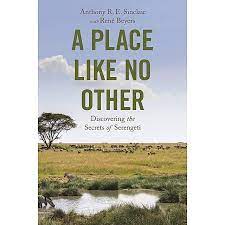
Just Released “A Place Like No Other”
A BIG Congratulations to Dr. Rene Beyers and Professor Tony Sinclair on their recent publication of “A Place Like No Other” by Princeton University Press.
“A Place Like No Other” is Anthony Sinclair’s firsthand account of how he and other scientists discovered the biological principles that regulate life in the Serengeti and how they rule all of the natural world. Co-authored with Dr. Rene Beyers.
A must read and a wonderful gift for the holiday season ahead!
#Rewilding #Biodiversity #Ecology #Ecosystems #climatechange #endangeredspecies #Serengeti #conservationeducation #conservation
Everyone Urged To Speak Up For Elephants In Global Public Consultation
PUBLIC CONSULTATION – The Canadian federal government has launched a public consultation to hear feedback on proposed measures to restrict or end the elephant ivory trade!
Everyone is urged to participate in the consultation to provide government feedback. Please take action by sending in pre-written letter here.
VANCOUVER (July 23rd, 2021) – Elephanatics and the Ivory-Free Canada Coalition (Humane Society International, Jane Goodall Institute of Canada, Elephant and Rhino Defenders, World Elephant Day) are pleased to hear that the Canadian federal government has launched a public consultation to hear feedback on proposed measures to restrict or end elephant ivory trade.
The Ivory-Free Canada coalition along with William Shatner, Bryan Adams, Robert Bateman, and other notable Canadians are calling for a ban on the elephant ivory trade in Canada.
In the past century, the African elephant population, which is currently listed as critically endangered/endangered by the International Union for the Conservation of Nature, has declined by 96%, with leading scientists warning the population could be lost altogether within the next few decades in the absence of global intervention to disincentivize poachers.
A Canadian petition launched by the coalition has garnered 636,180 signatures asking the Canadian government to end the legal trade of elephant ivory in Canada.
Every year, as many as 35,000 elephants die at the hands of elephant ivory poachers in Africa. The African elephant population has declined by a staggering 96 percent in the last century, and African elephants are at risk of becoming extinct within a couple of decades. In March of 2021, the International Union for Conservation of Nature (IUCN) updated the IUCN Red List of Threatened Species and declared the African forest elephant to be Critically Endangered and the African savanna elephant to be Endangered. Africa’s biodiversity is already threatened, and further loss of elephant populations will have devastating consequences.
The decline of African elephants is largely driven by poaching, motivated by demand for ivory. Accordingly, a Convention on International Trade in Endangered Species of Wild Fauna and Flora (CITES) resolution calls on the world community to shut down legal domestic ivory markets “as a matter of urgency”. This resolution mirrors the position of The African Elephant Coalition, which represents 78 percent of African elephant range States, as well as the position of an IUCN resolution on the closure of domestic ivory markets. Canada’s top trading partners, including the United States, China, and the United Kingdom have taken action in response.
Fran Duthie, President and Founder of Elephanatics, stated: “Tens of thousands of African elephants are killed every year to fill the global demand for elephant ivory. The world community is taking action, and more than 630,000 people have signed a petition calling on the Canadian government to ban elephant ivory trade as a matter of urgency. We encourage all Canadians to take part in the consultation and make their voices heard for African elephants.”
Robert Bateman, renowned Canadian artist and conservationist, stated: “The survival of African elephants hinges on the actions of the global community, and progressive nations like Canada have a responsibility to act accordingly. I am joining countless Canadians in calling on the Canadian government to act now and ban elephant ivory trade. I commend the government for launching a public consultation and encourage all concerned Canadians to take this critically important opportunity to speak up.”
Michael Bernard, deputy director of Humane Society International/Canada, stated: “Canada is at a crossroads and the actions we take now to protect African elephants will be remembered for generations to come. In keeping with its commitments to preserve global biodiversity and end human-induced extinctions, the Canadian government has launched a crucial public consultation. We urge all Canadians to participate and make clear that only a robust national ban on elephant ivory trade can truly help us end the senseless killing of African elephants.”
Quick Facts
- Studies indicate between 25,000 and 50,000 African elephants have been poached annually in recent decades, and even the lowest estimate exceeds the elephant birth rate, thereby posing a direct threat to these populations.
- In March of 2021, the International Union for Conservation of Nature updated the IUCN Red List of Threatened Species and declared the African forest elephant to be Critically Endangered and the African savanna elephant to be Endangered.
- In 2016, delegates to the 17thmeeting of the Conference of the Parties to the Convention on International Trade in Endangered Species of Wild Fauna and Flora (CITES) agreed in a resolution recommending that, “all Parties and non-Parties in whose jurisdiction there is a legal domestic market for ivory that is contributing to poaching or illegal trade, take all necessary legislative, regulatory and enforcement measures to close their domestic markets for commercial trade in raw and worked ivory as a matter of urgency.” Repeated government seizures of elephant ivory in Canada are irrefutable evidence of illegal ivory trade in this nation and likely represent a fraction of existing illegal trade.
- The African Elephant Coalition, comprised of 32 African nations (including 29 elephant range states) states, “any supply of ivory, including that within otherwise legal domestic markets, inherently increases the risk to elephant populations and local communities, due to the opportunity it creates for the laundering of illegal ivory under the guise of legality.”
- Canada’s top trading partners, including the United States, China and the United Kingdom have closed their elephant ivory markets in response to declining elephant populations.
- In addition to elephant ivory trade, Canada allows the import of elephant tusks and parts from trophy hunts. Approximately 300 African elephant tusks – representing 150 elephants – were legally imported into Canada from 2010-2018.
- 94% of Canadians support an elephant ivory trade ban (Insights West, 2020) and a public petition calling for a Canadian ban on elephant ivory trade has amassed over 600,000 signatures.
- Canada recently backed the G7 2030 Nature Compact to stop and reverse biodiversity loss, specifically pledging to “meet targets to increase the abundance of species populations worldwide, significantly reduce overall species extinction risk and eventually stop human-induced extinctions”.
More information regarding the Open Letter can be found here.
For interview requests, please call or email media contact below.
Media Contact
Tessa Vanderkop – Vice President, Elephanatics t. 604 789-8886 e. elephanaticsinfo@gmail.com
Elephants – Economies – Ecosystems = Biodiversity
What is the value of protecting Biodiversity?
“Biodiversity is an all-encompassing term for what many regard as nature-related risk. It includes the food we eat, the soil, clean water supplies, landscapes, and forests. Nature-related risk affects all those who rely on nature’s services in their supply chains, from fashion, to farming and construction. Today our concern is climate risk; tomorrow it will be about biodiversity and everything that is beyond carbon.”
cr. Andrew Mitchell Co-Founder, Task Force on Nature-related Financial Disclosures (TNFD) Founder of Global Canopy and CEO of Equilibrium Futures
Please sign this petition to #EndWildlifeTrade – https://petitions.ourcommons.ca/en/Petition/Details?Petition=e-3015