Study: More elephants are at risk of conflict with humans than previously thought

Human-elephant conflict is on the rise across Africa and is a major threat to wildlife conservation. Crops provide a highly nutritious food source, but elephants pursuing that source results in the destruction of farmer livelihoods, erodes human tolerance toward wildlife and manifests in retaliatory violence on crop-raiding elephants. 

Crop conflict was assumed to be mostly carried out by a select few elephants, but managers have lacked the means to assess this at a detailed level. New research, however, offers a first look at long-term trends in crop-raiding behavior. Researchers found that habitual crop-raiding elephants are only a part of the problem. 

The study was led by an international team of researchers from Colorado State University, Mara Elephant Project, Grumeti Fund, Tanzania Wildlife Research Institute, Kenya Wildlife Service and Save the Elephants. It was published Nov. 2 in the Journal of Animal Ecology

Researchers said that the findings could help conservationists better understand elephant behavior and develop new mitigation methods to reduce human-elephant conflict.

The team used the time spent in crops each year to classify the raiding elephants’ behavior as:

  • Rare, for 26% of elephants studied.
  • Sporadic, for 34%.
  • Seasonal, for 31%.
  • Habitual, for 9% of the elephants. 

Sporadic and seasonal elephants made up two-thirds of the population and accounted for 67% of agricultural use, while habitual individuals made up just 9% of the population and accounted for 32% of crop-raiding. The choice of tactics was not constant over time and elephants frequently changed tactics between years, which showed how the animals must balance the mortality risks and nutritional benefits of crop use at both daily and yearly scales. Only five of nine elephants remained habitual raiders for consecutive years. 

Patterns of elephants accessing agriculture as a food source ‘remarkably consistent’

“Elephants are incredibly unique animals and populations and individuals within those populations vary markedly in the extent to which agriculture is utilized,” said Kristen Snyder, a conservation scientist at CSU and the Grumeti Fund, and a co-author of the new study. “But the patterns of how agriculture is accessed — nocturnally, and while moving quickly — is remarkably consistent across individuals and populations.”

Traditionally, researchers and managers believed only a small contingent of elephants was responsible for the majority of crop raiding, and as a result, management strategies have been designed to thwart them, explained Nathan Hahn, a doctoral student in ecology at CSU and lead author of the study. 

Hahn said that the team wanted to assess how that expectation aligns with actual elephant behavior.

“It turns out crop-raiding is a lot more prevalent in the study populations than we knew previously,” he said. “In addition, patterns of conflict are complex because we saw that individuals frequently changed their agricultural use between years.” 

The research team analyzed nine years of GPS tracking data from 66 collared elephants 32 male and 34 female in collaboration with Kenya Wildlife Service and the Tanzania Wildlife Research Institute in the Serengeti-Mara Ecosystem. This ecosystem is a vast network of wildlife reserves, parks and community conservancies that straddles the Kenya-Tanzania border. 

The GPS data was used to determine the extent to which each individual elephant used agriculture and assessed the animals’ perception of risk based on the raiding tactics they employed in comparison to their daily movement patterns.

A ‘silver bullet’ approach is elusive for a complex species

Jake Wall, director of research and conservation for Mara Elephant Project and affiliate faculty at CSU, said that by using GPS tracking coupled with remote-sensing agricultural spatial information, scientists now have a method for characterizing crop-raiding behaviour within a given elephant population.

“This in turn should help improve elephant crop-raiding mitigation strategies by wildlife managers,” he said. 

Snyder said that the study’s findings can identify crop-raiding mitigation strategies that could have an impact and, just as importantly, eliminate those that do not suit the local context. 

“In the western Serengeti, the high prevalence of agricultural use among the study population indicates that strategies targeting individual problem animals are unlikely to significantly reduce crop damage,” she explained. 

Individual or small-scale approaches will make little difference if 80% of the local elephant population regularly utilize agriculture as a food source. 

“Instead, solutions that prevent elephant access to farms across broad scales are required,” said Snyder.

CSU Professor George Wittemyer said that elephants employ complex, adaptive movement that balances their desire to access resources while avoiding threats. He is a senior author of this study and also serves as chairman of the scientific board for Save the Elephants. 

“This research shows how that perceived balance differs between individuals, but also shifts over time for a given individual,” Wittemyer said. “This variation underpins the difficulty in solution oriented human-elephant coexistence measures. As we often find, a silver bullet is elusive for a species as complex and clever as elephants. We must be as adaptive as they are when trying to solve these problems.” 

###

This work was supported by the National Science Foundation. Permissions for the Tanzania elephant collaring, and research were granted by Tanzania Wildlife Research Institute, Tanzania Commission for Science and Technology, Tanzania Wildlife Management Authority and Tanzania National Parks, and in Kenya by the Kenya Wildlife Service. 

Journal of Animal Ecology, (author note): “Risk perception and tolerance shape variation in agricultural use for a transboundary elephant population” https://besjournals.onlinelibrary.wiley.com/doi/10.1111/1365-2656.13605 DOI: 10.1111/1365-2656.13605

Journal of Animal Ecology published by the British Ecological Society features the best animal ecology research that develops, tests and advances broad ecological principles. Visit https://besjournals.onlinelibrary.wiley.com/journal/13652656 to learn more.

Images:

Olchoda: Meaning “disturber” in Maa, Olchoda was collared in November 2016 by Kenya Wildlife Service and Mara Elephant Project in response to conflict in Pardamant Conservancy, a high conflict area. Photo Credit: Mara Elephant Project

Caroline Collaring: The collaring operation for Kenya Wildlife Service and Mara Elephant Project elephant Caroline in May 2018. Photo Credit: Mara Elephant Project


Fitz Collaring: The collaring operation for Kenya Wildlife Service and Mara Elephant Project elephant Fitz sponsored by the Angama Foundation in the Nyakweri Forest in August 2019. Photo Credit: Mara Elephant Project
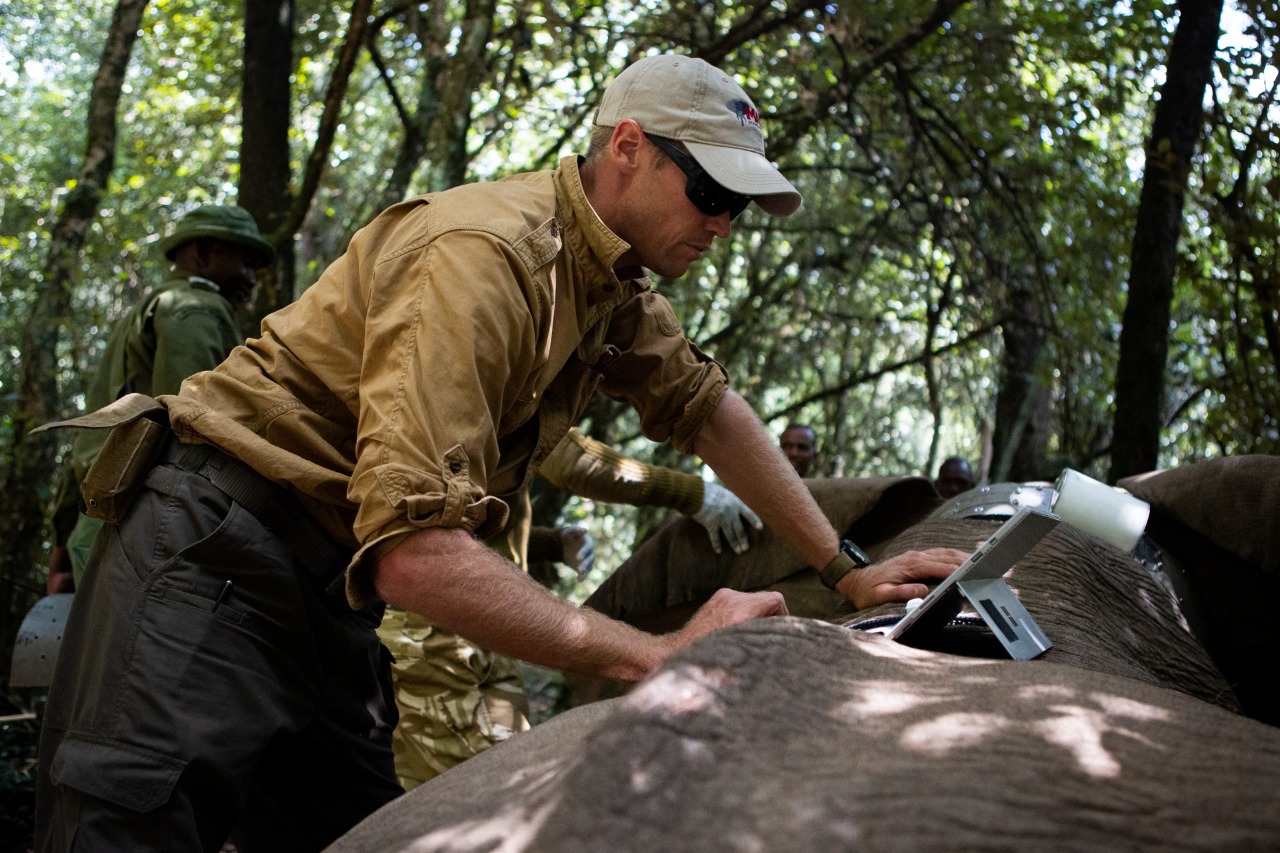
Fred: Kenya Wildlife Service and Mara Elephant Project collared elephant Fred; a large male that has been continuously tracked since 2012. Photo Credit: Mara Elephant Project

Ivy: Kenya Wildlife Service and Mara Elephant Project collared elephant Ivy; a habitual crop raider that has been continuously tracked since 2011. Photo Credit: Mara Elephant Project


Lucy: Kenya Wildlife Service and Mara Elephant Project collared elephant Lucy who was collared in April 2015 and monitored until September 2017. Photo Credit: Mara Elephant Project


Author Contact:

Nathan Hahn

Colorado State University

nhahn@rams.colostate.edu 

George Wittemyer

Colorado State University

g.wittemyer@colostate.edu 

Jake Wall

Mara Elephant Project

jake@maraelephantproject.org 

walljcg@gmail.com 

Kristen Denninger Snyder

Grumeti Fund

kristens@grumetifund.org 

Media Contacts:

Claire Bolles

Communications Director

Mara Elephant Project

claire@maraelephantproject.org 

317-440-0083

Jane Wynyard

Head of Communications 

Save the Elephants

jane@savetheelephants.org 

+254 (0) 708669635

Mary Guiden

Science Writer and Senior Public Relations Specialist

Colorado State University
mary.guiden@colostate.edu 

Just Released “A Place Like No Other”

A BIG Congratulations to Dr. Rene Beyers and Professor Tony Sinclair on their recent publication of “A Place Like No Other” by Princeton University Press.

“A Place Like No Other” is Anthony Sinclair’s firsthand account of how he and other scientists discovered the biological principles that regulate life in the Serengeti and how they rule all of the natural world. Co-authored with Dr. Rene Beyers.

A must read and a wonderful gift for the holiday season ahead!

https://lnkd.in/gD2BcRpk

#Rewilding #Biodiversity #Ecology #Ecosystems #climatechange #endangeredspecies #Serengeti #conservationeducation #conservation


World Elephant Day 2021

Happy #WorldElephantDay! 2021
The wondrous world and existence of elephants is trumpeted today!
World Elephant Day has highlighted our coalition’s #IvoryFreeCanada campaign and consultation brought forth by the Canadian government to ban the trade of elephant ivory in Canada.
Please read the article below. #Donate to your favourite elephant organization and be sure to take in all the ‘elevents’ found on World Elephant Day website.
Mara Elephant Project is our elephant organization of choice to donate to.

https://worldelephantday.org/news/2021/08/o-canada-we-stand-to-ban-ivory?fbclid=IwAR17vrDMTO0Og_MOpC6daTcbGotruWUhvfiMeJTnApumTkBLEc_5mOdrue0

Everyone Urged To Speak Up For Elephants In Global Public Consultation

PUBLIC CONSULTATION  – The Canadian federal government has launched a public consultation to hear feedback on proposed measures to restrict or end the elephant ivory trade!

Everyone is urged to participate in the consultation to provide government feedback.  Please take action by sending in pre-written letter here.

VANCOUVER (July 23rd, 2021) – Elephanatics and the Ivory-Free Canada Coalition (Humane Society International, Jane Goodall Institute of Canada, Elephant and Rhino Defenders, World Elephant Day) are pleased to hear that the Canadian federal government has launched a public consultation to hear feedback on proposed measures to restrict or end elephant ivory trade.

The Ivory-Free Canada coalition along with William Shatner, Bryan Adams, Robert Bateman, and other notable Canadians are calling for a ban on the elephant ivory trade in Canada.

In the past century, the African elephant population, which is currently listed as critically endangered/endangered by the International Union for the Conservation of Nature, has declined by 96%, with leading scientists warning the population could be lost altogether within the next few decades in the absence of global intervention to disincentivize poachers.

A Canadian petition launched by the coalition has garnered 636,180 signatures asking the Canadian government to end the legal trade of elephant ivory in Canada.

Every year, as many as 35,000 elephants die at the hands of elephant ivory poachers in Africa. The African elephant population has declined by a staggering 96 percent in the last century, and African elephants are at risk of becoming extinct within a couple of decades. In March of 2021, the International Union for Conservation of Nature (IUCN) updated the IUCN Red List of Threatened Species and declared the African forest elephant to be Critically Endangered and the African savanna elephant to be Endangered. Africa’s biodiversity is already threatened, and further loss of elephant populations will have devastating consequences.

The decline of African elephants is largely driven by poaching, motivated by demand for ivory. Accordingly, a Convention on International Trade in Endangered Species of Wild Fauna and Flora (CITES) resolution calls on the world community to shut down legal domestic ivory markets “as a matter of urgency”. This resolution mirrors the position of The African Elephant Coalition, which represents 78 percent of African elephant range States, as well as the position of an IUCN resolution on the closure of domestic ivory markets. Canada’s top trading partners, including the United States, China, and the United Kingdom have taken action in response.

Fran Duthie, President and Founder of Elephanatics, stated: “Tens of thousands of African elephants are killed every year to fill the global demand for elephant ivory. The world community is taking action, and more than 630,000 people have signed a petition calling on the Canadian government to ban elephant ivory trade as a matter of urgency. We encourage all Canadians to take part in the consultation and make their voices heard for African elephants.”

Robert Bateman, renowned Canadian artist and conservationist, stated: “The survival of African elephants hinges on the actions of the global community, and progressive nations like Canada have a responsibility to act accordingly. I am joining countless Canadians in calling on the Canadian government to act now and ban elephant ivory trade. I commend the government for launching a public consultation and encourage all concerned Canadians to take this critically important opportunity to speak up.”

Michael Bernard, deputy director of Humane Society International/Canada, stated: “Canada is at a crossroads and the actions we take now to protect African elephants will be remembered for generations to come. In keeping with its commitments to preserve global biodiversity and end human-induced extinctions, the Canadian government has launched a crucial public consultation. We urge all Canadians to participate and make clear that only a robust national ban on elephant ivory trade can truly help us end the senseless killing of African elephants.”

Quick Facts

  • Studies indicate between 25,000 and 50,000 African elephants have been poached annually in recent decades, and even the lowest estimate exceeds the elephant birth rate, thereby posing a direct threat to these populations.
  • In March of 2021, the International Union for Conservation of Nature updated the IUCN Red List of Threatened Species and declared the African forest elephant to be Critically Endangered and the African savanna elephant to be Endangered.
  • In 2016, delegates to the 17thmeeting of the Conference of the Parties to the Convention on International Trade in Endangered Species of Wild Fauna and Flora (CITES) agreed in a resolution recommending that, “all Parties and non-Parties in whose jurisdiction there is a legal domestic market for ivory that is contributing to poaching or illegal trade, take all necessary legislative, regulatory and enforcement measures to close their domestic markets for commercial trade in raw and worked ivory as a matter of urgency.” Repeated government seizures of elephant ivory in Canada are irrefutable evidence of illegal ivory trade in this nation and likely represent a fraction of existing illegal trade.
  • The African Elephant Coalition, comprised of 32 African nations (including 29 elephant range states) states, “any supply of ivory, including that within otherwise legal domestic markets, inherently increases the risk to elephant populations and local communities, due to the opportunity it creates for the laundering of illegal ivory under the guise of legality.”
  • Canada’s top trading partners, including the United States, China and the United Kingdom have closed their elephant ivory markets in response to declining elephant populations.
  • In addition to elephant ivory trade, Canada allows the import of elephant tusks and parts from trophy hunts. Approximately 300 African elephant tusks – representing 150 elephants – were legally imported into Canada from 2010-2018.
  • 94% of Canadians support an elephant ivory trade ban (Insights West, 2020) and a public petition calling for a Canadian ban on elephant ivory trade has amassed over 600,000 signatures.
  • Canada recently backed the G7 2030 Nature Compact to stop and reverse biodiversity loss, specifically pledging to “meet targets to increase the abundance of species populations worldwide, significantly reduce overall species extinction risk and eventually stop human-induced extinctions”.

More information regarding the Open Letter can be found here.

For interview requests, please call or email media contact below.

Media Contact

Tessa Vanderkop – Vice President, Elephanatics t. 604 789-8886 e. elephanaticsinfo@gmail.com


ReconAfrica: Elephanatics Letter to Canadian Government


ReconAfrica is a Canadian oil and gas company with rights to drill for oil in Namibia and Botswana. It is proven that the exploration of petroleum has routinely been accompanied by ecological harm, and has often been the pretext for conflicts. The exploration area in Namibia and Botswana borders three national parks, the Okavango River, and the Okavango Panhandle, which supplies water to the unique Okavango Delta, a UNESCO World Heritage site. Read our letter to the Canadian government here: https://bit.ly/3pVh63M

Schindlers Eco Forensics: Letter to Canadian Government: ReconAfrica

https://schindlersforensics.ai/eco-forensics-letter-to-the-canadian-government-in-re-reconafrica-kavango-oil-exploration/

…… Dear Sirs/Mesdames,

RE: RECONAFRICA PETROLEUM EXPLORATION ACTIVITIES IN PEL NO. 73 KAVANGO BASIN, NAMIBIA

  1. The above matter refers.
  2. We, as Schindlers Attorneys, a law firm based in Johannesburg, South Africa, and Schindlers EcoForensics (“Schindlers”) a registered interested and affected party (“IAP”) for the above matter, address this letter in our capacity as such with regard to the Environmental Impact Assessment (“EIA”) for the petroleum exploration activities conducted by ReconAfrica in Pel No. 73 Kavango Basin, Namibia (“the Project”). An email confirming Schindlers’ registration as an IAP is attached hereto, marked as Annexure “A”.
  1. This letter is intended to convey our concerns regarding Reconnaissance Energy Africa Ltd (“ReconAfrica”),1 specifically whether ReconAfrica have successfully complied with all the statutory requirements in terms of the Namibian Environmental Impact Assessment Regulations (“EIA Regulations”) as well as the provisions of the Namibian Environmental Management Act (“EMA”),2 insofar as same relate to the Project. A letter containing Schindlers’ comments and submissions in relation to the above is attached hereto, marked as Annexure “B”.
  2. Furthermore, this letter addresses our concerns over the actions of a Canadian-registered company which is clearly violating international agreements to which Canada is a signatory.
  3. If the Project is allowed to proceed, the proposed activities will have devastating effects on global climate change and the ecosystem within the proposed drilling site, further infringing both the human and socio-economic rights of the local and indigenous peoples of Namibia……….

Read the full letter in link above.

Where Have All the Elephants Gone? by Margaret Bear

We are very pleased to share an article written by Margaret Bear for BCnature magazine Spring edition 2021.

Elephanatics was instrumental in assisting with information gathered for this article and we thank Margaret for her deep love and concern for elephants. The Canadian government needs to act immediately and close the domestic trade in elephant ivory in Canada. Our petition is now at 627, 000 signatures. African savannah elephants are now on the endangered IUCN Red List and African forest elephants are on the critically endangered list.

What is Canada waiting for?


Elephant Advocacy with Elephanatics

By: Kellie Diguangco

Elephant Advocacy with ElephanaticsElephanatics Elephant Advocacy Elephants on Parade Middle Grade Monthly Theme year_2021

March was a special month for us. Not only was it OwlCrate Jr’s 4th anniversary, we got to celebrate some of the largest animals in the world! We’ve brought along some friends to help us and you’re here too!

Elephanatics is an elephant advocacy organization based in Vancouver, BC, Canada that offers free educational programs all about elephant conservations. We spoke to President and co-founder, Fran Duthie all about how elephants fight climate change and how you can be an advocate too.

Fran: We are thrilled to be a part of your fabulous ‘Elephants on Parade‘ box! Thank you!
Kellie: Thank you! Climate change is an important issue for everyone and you share on your site that elephants help fight global warming! Can you tell us more about this?
F: The large appetites and feeding habits of African forest elephants lead to more plant mass which stores more carbon to help mitigate climate change. Our Lesson plan, One Mouthful at a Time, addresses this in detail. The graphic below illustrates their role in helping keep their ecosystems in balance by controlling the amount of C02 that gets stored and sequestered.

K: Can you share with us something unexpected you have learned about elephants that most people might not know?
F: I was fortunate enough to visit Kenya in 2019 and was overjoyed at viewing elephants in their wild, natural habitats. I was astounded at their ability to move so quietly. We were 10 feet away from a herd grazing on grasses in the savannah and they were so silent you would never have known they were there except their size gave them away!
The African elephant has 5 toenails on its front feet and 4 on its back feet. Their feet are flat because of a large pad of gristle under each heel which acts as a cushion to absorb sound and helps them to walk quietly. It was amazing to see such a huge animal – an average weight of 6,000 kg – gliding through the plains with such ease. A beautiful sight to behold.
K: Wow! The rules around hunting elephants have changed as recently as 2019. How can we learn to speak up for elephants?
Fran: Unfortunately, trophy hunting of elephants is still allowed in certain countries in Africa. Education is the best way to learn how to speak up for elephants.  Holding marches, signing petitions, writing letters to government officials asking for the trade of elephant ivory to be banned in your country, social media involvement, volunteering for an elephant organization, and sharing Elephanatics education lesson plans! These are some of the ways that can help get the word out about the crises facing both the African and Asian elephant.
K: What does becoming Elephant Ambassador for Elephantics entail?
F: It’s as easy as sending us an email saying you would like to get on board and volunteer some of your time to help us save elephants! For more information on becoming an Ambassador, you can visit our volunteer page. We look forward to hearing from you!
K: Letter writing is a great way to advocate. It’s a way most kids can feel involved and advocate, especially in this time when we are all indoors.
FI agree. We have the lesson plan on Ivory-Free Canada but it is actually a lesson plan that teachers should do with their students. Students learn to compose letters in support of elephant conservation while recognizing letter writing is an important civic action.
It is part of the One Mouthful at a Time Lesson Plan which is a super fantastic lesson plan that deals with how elephants are allies against climate change.
K: Thank you, Fran! 
Find out more and become an elephant advocate on their website or give them a follow on Instagram here.
Our ELEPHANTS ON PARADE box is now available for purchase in our past boxes shop!
Subscribe to OwlCrate Jr today at www.owlcratejr.com!

Elephanatics presents – Ivory Is For Elephants – elephants and their importance to the global community and environment

"Elephanatics Foundation - Free elephant conservation lesson plans, toolkits for teachers, and persuasive essay resources."
The numbers are staggering as we learn that humanity is responsible for a decrease in animal populations worldwide of 68% in the past 50 years.  At a time when more than 1 million animals are at risk of extinction, the links between human health and the health of the planet couldn’t be clearer, as evidenced by our current pandemic. Seventy percent of emerging viral diseases are caused by human/wildlife interface. The biggest issues facing the global community today are losses to biodiversity. Loss of wildlife affects ecosystems we all rely on to keep us healthy. Learn more about how elephants help preserve our natural world and why poaching, human-elephant conflict, and illegal trade is related to our own survival.
Tune in and get inspired to save elephants!
Speakers – Dr. Rene Beyers, PhD / Conservationist / African Elephant Advisor, Elephanatics
Melanie Reding, Educator / Curriculum Developer, Elephanatics
* Exploring By The Seat Of Your Pants is an online educational program that aims to inspire the next generation of scientists, explorers and conservationists by bringing science, exploration, adventure and conservation live into classrooms through virtual speakers and field trips with leading experts across the globe.

https://www.youtube.com/watch?v=1-5-R616REU